
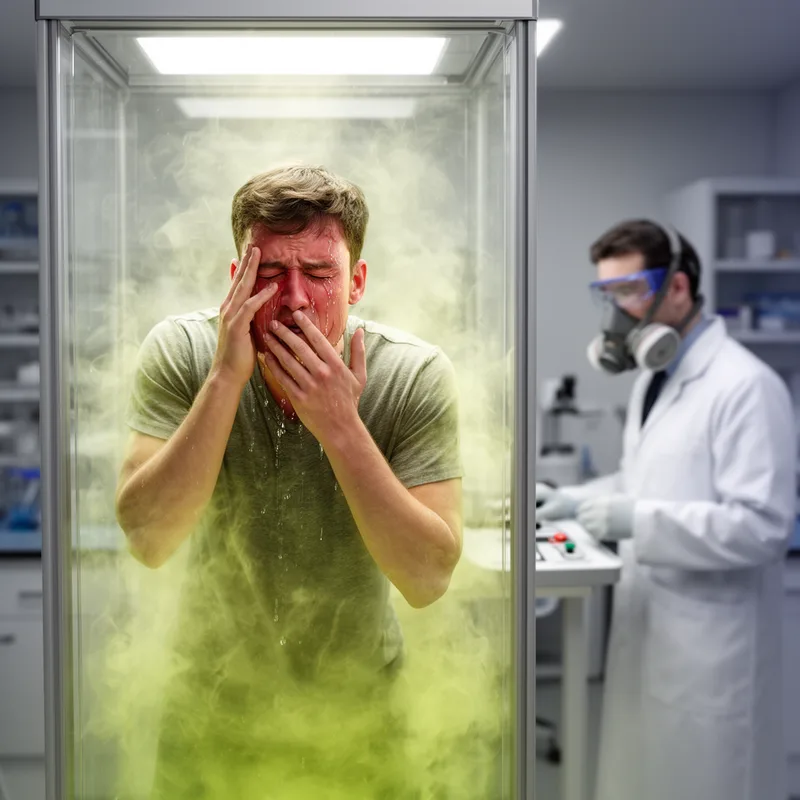
nitrochloromethane
- noun
- /ˌnaɪtroʊˌklɔːroʊˈmɛθeɪn/
- Specialized
- Exposure to nitrochloromethane can cause severe eye and respiratory irritation.
Examples
-
The laboratory handled nitrochloromethane with extreme care due to its use as a tear gas.
-
The use of nitrochloromethane in crowd control is controversial.
-
During chemical warfare in the past, nitrochloromethane was dispersed to incapacitate enemy troops.
-
Can nitrochloromethane be safely handled by civilians?
-
Inhalation of nitrochloromethane can lead to coughing and difficulty breathing.
-
The military used nitrochloromethane as a non-lethal agent during the conflict.
-
Researchers studied the effects of nitrochloromethane on human health and safety.
Synonyms

 57
4.4
57
4.4

A chemical that makes eyes water and people cough to make crowds move away
 15
3.7
15
3.7
A gas that makes people's eyes burn and makes them cry, used by police to break up crowds


 1
7.0
1
7.0
A type of tear gas used by police that causes eye and skin pain and lasts long
A strong poisonous liquid used to kill pests that hurts the eyes and makes breathing difficult

A heavy colorless liquid that makes your eyes water and causes vomiting, used to kill pests and in tear gas
A gas that burns the eyes and makes people cry, used by police to break up crowds
A strong tear gas chemical that causes severe eye and skin burns and breathing problems

A chemical used as tear gas that makes your eyes sting and water for a long time
Antonyms

Surface Forms
Morphology
nitrochloromethane = chloromethane (opaque) = nitro + chloromethane + nitro
The components are technical chemical combining forms unfamiliar to average B1 learners, so meaning cannot be derived from the parts.
Etymology
Nitrochloromethane breaks into three clear parts: nitro meaning 'nitrogen', chloro meaning 'chlorine', and methane meaning a 'simple gas' like natural gas. So the name tells you it is a gas with nitrogen and chlorine parts, which is why nitrochloromethane is a strong irritant and has been used as a tear gas.