
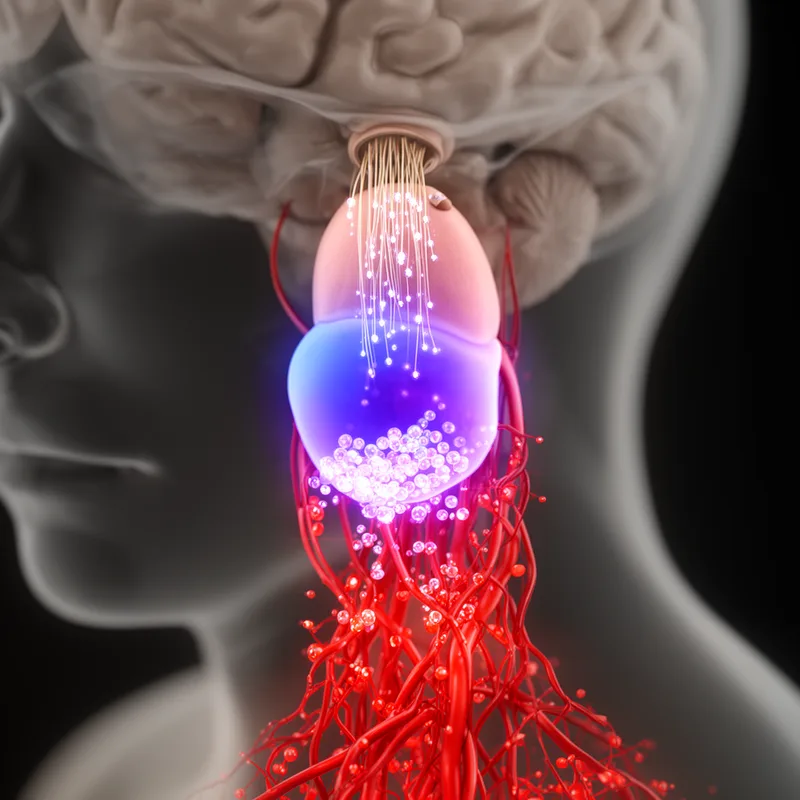
neurohypophysis
- noun
- /ˌnʊroʊhaɪˈpɒfɪsɪs/
- Specialized
- Doctors study the neurohypophysis to understand how it releases hormones into the bloodstream.
Examples
-
Supporting this conclusion is the finding that in rats, water deprivation depletes the neurohypophysis of endothelin as well as vasopressin.
Academic text (1991) -
The neurohypophysis plays a crucial role in regulating the body's water balance by releasing vasopressin.
-
An imbalance in the neurohypophysis can lead to serious hormonal disorders.
Synonyms

The back part of the small gland at the base of the brain that sends hormones to control body water
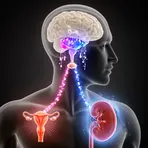
The back part of the gland at the brain base that stores and sends hormones for water balance and childbirth

The back part of the pituitary gland that stores and releases hormones made in the brain
Surface Forms
Morphology
neurohypophysis = hypophysis (semi-transparent) = neuro + hypophysis
The term is formed with the technical prefix 'neuro-' plus 'hypophysis', but the exact anatomical reference is specialized rather than fully guessable for an average learner.
Etymology
Neurohypophysis combines neuro- 'nerve' and hypophysis 'under growth', giving the image of a gland 'under' the brain that is linked to nerves. So the neurohypophysis is the back part of the pituitary that sends hormones into the blood after nerve signals from the brain.

