

neoclassicist
- adjective
- /ˌniːoʊˈklæsɪsɪst/
- Specialized
- Her neoclassicist approach to sculpture emphasized harmony and balance over modern abstraction.
Examples
-
The gallery's new exhibit highlights neoclassicist trends in contemporary architecture.
-
The neoclassicist style can be seen in many government buildings.
-
Many art critics described the painting as having a distinctly neoclassicist style.
-
The neoclassicist movement influenced many artists in the 18th century.
-
Her neoclassicist approach to sculpture emphasized harmony and balance over modern abstraction.
-
The gallery's new exhibit highlights neoclassicist trends in contemporary architecture.
-
Many art critics described the painting as having a distinctly neoclassicist style.
Synonyms

 6
7.4
6
7.4

Showing styles from ancient Greek and Roman art in modern buildings or paintings
 1
7.0
1
7.0
A style that copies the art and buildings of ancient Greece and Rome
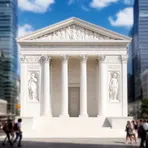
Relating to a style that copies ancient Greek and Roman art and design
How Classical

Surface Forms
Morphology
neoclassicist = classicist (transparent) = neo + classicist
The formation is clearly 'neo-' (new) + 'classicist' (a supporter or practitioner of classical styles), so the relation is directly derivable.
Etymology
Neoclassicist breaks into neo- 'new', classic 'the old Greek and Roman style', and -ist 'a follower or a style'. So, as an adjective neoclassicist means a 'new classical' way of making art or buildings that returns to balance, order, and simple beauty.