

neoclassical
 6
7.4
6
7.4

- adjective
- /ˌniːoʊˈklæsɪkəl/
- Specialized
- Many universities have adopted neoclassical elements in their buildings, reflecting a respect for classical education and tradition.
- neoclassical style
- neoclassical art
- neoclassical theory
Examples
-
The museum features a stunning collection of neoclassical sculptures that pay homage to ancient Greek artistry.
-
Weldonmere was white, with pointed Victorian gables and round neoclassical columns.
Fiction book (2000) -
The artist was inspired by the neoclassical movement.
-
I reside in a neoclassical house in a historical district in a coastal city.
Fiction book (2002) -
The artist organized the historical actors into a Neoclassical ellipse to emphasize unity and peaceful negotiation.
Academic text (2013) -
By the end of the eighteenth century, Phillis Wheatley had emerged as perhaps a singular neoclassical voice.
Academic text (1992) -
She admired the neoclassical architecture of the public library, with its grand columns and intricate facade.
Synonyms
 1
7.0
1
7.0
A style that copies the art and buildings of ancient Greece and Rome

Relating to a style based on ancient Greek and Roman art
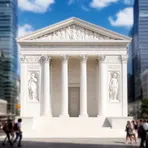
Relating to a style that copies ancient Greek and Roman art and design
How Classical
32
5.1

- Specialized
6
7.4
Surface Forms
Morphology
Etymology
The word neoclassical combines neo- ('new') and classical ('of ancient Greece and Rome'). So neoclassical means a 'new' version of old Greek and Roman styles in art, buildings, or writing.