

mycobacterium
 1
9.9
1
9.9

- noun
- /ˌmaɪkoʊˈbækˌtɪəriəm/
- Specialized
- Fortunately, cervical lymphadenopathy involving nontuberculous mycobacterium almost exclusively occurs in children under 12 years of age.
- Mycobacterium tuberculosis
- mycobacterium infection
- Mycobacterium bovis
Examples
-
Leprosy is caused by the bacterium Mycobacterium leprae, which primarily affects the skin and nerves.
-
And to wrap this all up, we could show that the copper content of Mycobacterium tuberculosis infected lung tissue does also increase.
-
About a third of the world's population is infected with Mycobacterium tuberculosis.
Academic text (2000) -
Distinguish the public health implications of the findings of this retrospective review regarding control of Mycobacterium bovis infection.
Academic text (2015) -
Tuberculous infections are not considered contagious unless the mycobacterium involves either the lung or the larynx.
Academic text (1995) -
Tuberculosis in humans and animals results from infection by bacilli within the Mycobacterium tuberculosis complex (1).
Academic text (2015) -
Nasal tuberculosis is a rare, chronic, granulomatous infection caused by Mycobacterium tuberculosis.
Academic text (2002) -
Tuberculosis (TB), caused by bacterial pathogens of the Mycobacterium tuberculosis complex (MTBC), is a major global health problem.
Academic text (2013) -
In 1873, the Norwegian scientist Armauer Hansen correctly identified Mycobacterium leprae as the bacterium that causes leprosy.
Academic text (2006) -
The bacterium Mycobacterium tuberculosis is known to cause tuberculosis, a serious infectious disease that affects the lungs.
Synonyms


 1
9.7
1
9.7
A group of long, thin bacteria that includes types living on dead material and types causing diseases like tuberculosis
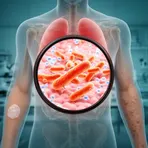
A type of bacteria that do not move and need air, including those that cause tuberculosis and leprosy
Compounds

- Specialized
1
4.6
A bacterium that causes tuberculosis in people and some animals
- Specialized
A type of bacteria that do not move and need air, including those that cause tuberculosis and leprosy

- Specialized
A type of bacteria that causes leprosy, a long illness of the skin and nerves
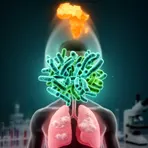
- Specialized
A type of bacteria found mainly in West Africa that can cause tuberculosis in people
Surface Forms
Morphology
Etymology
The word mycobacterium is made of myco- meaning 'fungus' and bacterium meaning 'small rod'. Early scientists thought these bacteria looked like fungi and were long rods, so the name points to their fungus-like look and rod shape, which is why mycobacterium refers to that group of bacteria that can cause diseases like tuberculosis.