
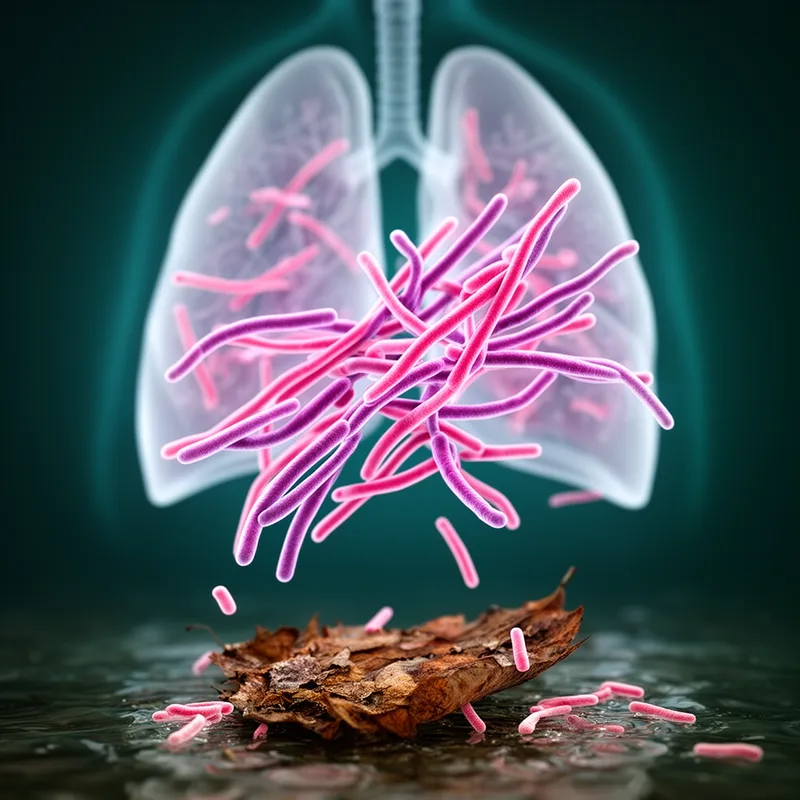
mycobacteria


 1
9.7
1
9.7
- noun
- /ˌmaɪkoʊbækˈtɪəriə/
- Specialized
- Nontuberculous mycobacteria (NTM) and, in particular, the Mycobacterium abscessus group are recognized as emerging respiratory pathogens among patients with cystic fibrosis.
- nontuberculous mycobacteria
- growing mycobacteria
Loading YouTube…
Watch on YouTubeThey're just tolerant to the antibiotics and there are non culpable mycobacteria that may be the persistors that lead to recurrence.
- They're just tolerant to the antibiotics and there are non culpable mycobacteria that may be the persistors that lead to recurrence.
Examples
-
HIV-infected patients are quite vulnerable to transmission of the mycobacteria from others with active tuberculosis, and those with latent disease have a high rate of reactivation.
Academic text (1995) -
However, DESTUS does not take into account the migration history of Europeans and the mycobacteria they introduced into Africa.
Academic text (2013) -
The number of organisms present suggests that these are nontuberculous mycobacteria or that the patient is severely immunocompromised.
Academic text (1995) -
Mycobacteria have been mentioned as possible agents, and familial patterns of sarcoidosis and mycobacterial diseases have some common features.
Academic text (1998) -
Mycobacteria are slow-growing aerobic bacteria that have thick, wax-like, almost impenetrable cell walls.
Academic text (2005) -
Patients with cervical lymphadenitis due to nontuberculous mycobacteria can present in an identical fashion and may be difficult to differentiate from those with M. tuberculosis infection.
Academic text (1995) -
Mycobacterium tuberculosis (tuberculosis TB) and Mycobacterium leprae (Hansen's disease or leprosy) are the most common mycobacteria in humans.
Academic text (2005) -
The presence of mycobacteria in the soil can help decompose organic matter.
-
Some species of mycobacteria are known to cause diseases such as tuberculosis.
-
In humans, mycobacteria like Mycobacterium leprae can lead to leprosy, which primarily affects the skin and nerves.
Synonyms
 1
9.9
1
9.9
A rod-shaped bacterium that includes harmless types and others that cause diseases like tuberculosis and leprosy

A type of bacteria that do not move and need air, including those that cause tuberculosis and leprosy
Surface Forms
Morphology
Etymology
Mycobacteria combines myco- meaning 'fungus', as in 'mushroom', and bacteria meaning 'tiny rods' or 'germs'. So the name shows these are rod-shaped germs that once looked like fungus, which helps explain why some of them cause diseases like tuberculosis and leprosy.