
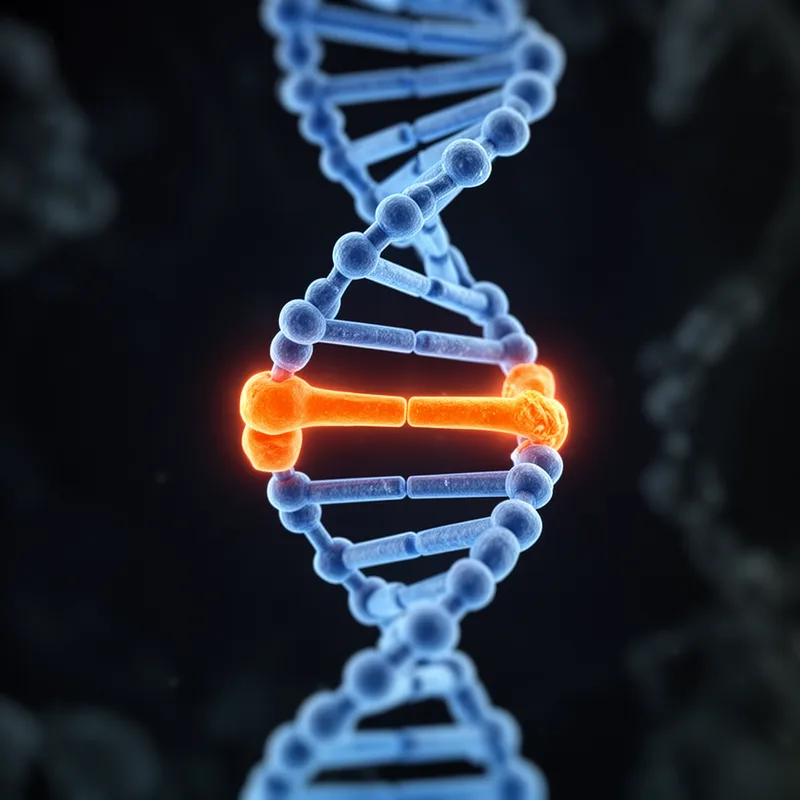
mutation
 85
5.6
85
5.6

- noun
- /mjuːˈteɪʃən/
- Specialized
 :
mutación
:
mutación
- We will discuss the mutations studied thus far in C. elegans organized by function.
- genetic mutation
- gene mutation
- mutation rate
Replication errors can lead to random mutations, much like DNA damage can.
- Replication errors can lead to random mutations, much like DNA damage can.
- And that comes from mutations in the genetic code.
- That changes proteins a lot faster than DNA mutations, but it can get a bit.
- They have all been shown to have UV mutation signatures when we sequence the tumors.
- No, all organisms on the planet change over time when random mutations occur in their genetic code.
- But all these now are actually false because we didn't get here through random mutations.
- And so new mutations arise and those mutations influence the trade.
Examples
-
So these are mutations in genes that are there to stop cancers when cancers appear.
-
They wanted to take me and study my genetic mutation.
-
Try to imagine how quickly any successful mutation could thus be spread among the population.
Fiction book (1999) -
And I'm worried that this mutation could potentially jump species.
-
In most cases, however, the risk associated with the mutation isn't that high.
-
And there's some evidence that maybe the mutation rate is higher.
-
No, all organisms on the planet change over time when random mutations occur in their genetic code.
-
Replication errors can lead to random mutations, much like DNA damage can.
-
The scientists studied a mutation in the lab that causes butterflies to have brighter colors.
-
Researchers discovered a mutation that allows certain bacteria to survive in extreme temperatures.
Synonyms
 13
4.2
13
4.2
A permanent change in a gene's DNA that can alter traits
 2
4.2
2
4.2
A permanent change in a gene that parents can pass to children
Compounds


- Specialized
Change in the number or shape of the parts in a cell that carry genes

- Specialized
A change in a word's first consonant sound caused by grammar in languages like Welsh
How Extensive

Surface Forms
Morphology
Etymology
Mutation comes from the Latin mutare 'to change' and shares the root with the verb mutate, so a mutation is a 'change' in an organism's DNA or genes that can create new traits.