
gene mutation
 2
4.2
2
4.2

- noun
- /dʒin mjuˈteɪʃən/
- Specialized
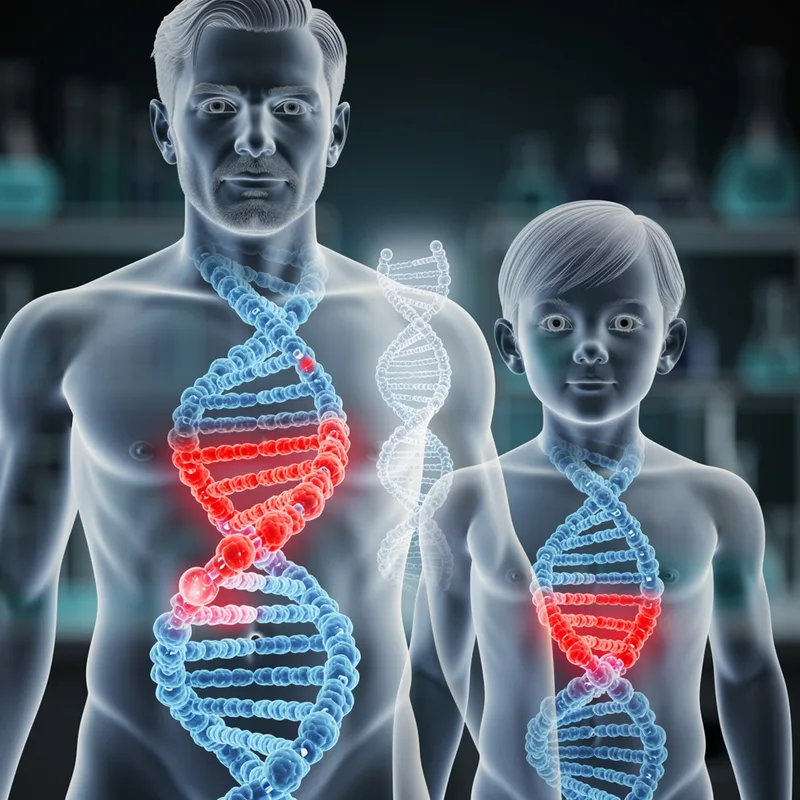
- A gene mutation can lead to inherited diseases, which may be passed down through generations.
- fas gene mutations
Loading YouTube…
Watch on YouTubeIn fact, pregnant women that take high doses of folic acid and have this gene mutation have very high incidences of postpartum depression.
- In fact, pregnant women that take high doses of folic acid and have this gene mutation have very high incidences of postpartum depression.
Examples
-
Further studies are required to establish the clinical utility of routine multi-gene mutation testing for patients with MBC.
Academic text (2018) -
Is it possible for this contamination to initiate gene mutations that may lead to cancer?
Blog text (32) -
No similar gene mutation models were observed between these two groups.
Academic text (2018) -
Gene mutation is far more common and more natural than some people may think.
Academic text (2012) -
70% of the cases are new gene mutations, while only 30% are passed from parent to child.
Blog text (30) -
"If a woman had this gene mutation, she has an 80 percent chance of getting breast cancer.
Blog text (19) -
A gene mutation whose discovery was announced Wednesday triples the risk for Alzheimer's disease.
Blog text (26) -
But when you can materially change somebody's life by fixing those gene mutations, that's when you're really making an impact.
-
So sickle cell disease is a single gene mutation of the beta globin gene, a point mutation, A modification that causes this disease.
-
Chromosomal defects and specific gene mutations result in male infertility, and many idiopathic cases of infertility are thought to have a genetic basis as well.
Academic text (2003)
Synonyms
 85
5.6
85
5.6
A permanent change in DNA that can cause new traits
 13
4.2
13
4.2
A permanent change in a gene's DNA that can alter traits
How Severe
- Specialized

- Specialized
- Specialized
2
4.2
- Specialized
Surface Forms
Morphology
The meaning 'a permanent alteration in the DNA sequence of a gene' is directly derivable from combining 'gene' (a DNA segment influencing characteristics) with 'mutation' (a permanent change in DNA), so a learner who knows both constituents can infer it refers to a change affecting a gene. The composition is literal and cross-linguistically common, making the phrase transparent even though it is technical.
Etymology
The compound noun gene mutation pictures a gene as a tiny set of instructions and mutation as a small 'change' to those instructions. Imagine a little typo in a recipe that makes the dish turn out differently; because this change is in the DNA and can be 'passed on' to children, gene mutation means a lasting change in a gene.