

musculus serratus anterior
- noun
- /ˈmʌskjələs ˈsɛrətəs ænˈtɪrɪər/
- Specialized
- The musculus serratus anterior plays a crucial role in allowing you to lift your arms above your head.
Examples
-
During exercise, the musculus serratus anterior helps stabilize the shoulder blade.
-
Weakness in the musculus serratus anterior can lead to difficulty pushing objects away from the chest.
-
Proper breathing techniques can help engage the musculus serratus anterior during strenuous activity.
-
The musculus serratus anterior plays a crucial role in shoulder movement.
-
Proper breathing techniques can help engage the musculus serratus anterior during strenuous activity.
-
The musculus serratus anterior plays a crucial role in allowing you to lift your arms above your head.
-
Weakness in the musculus serratus anterior can lead to difficulty pushing objects away from the chest.
Synonyms
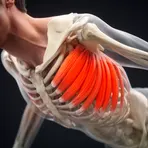
A muscle on the side of the chest that moves the shoulder blade and helps lift the ribs

A muscle that helps turn the shoulder blade and lift the ribs

A large chest muscle on the side that helps move the shoulder blade and lift the ribs
Surface Forms
Morphology
musculus + serratus + anterior
The term is compositional: musculus (muscle) + serratus (saw-toothed) + anterior (front) yields a literal description ‘front, saw-toothed muscle,’ so a learner who knows the constituents can infer it refers to a muscle at the front side of the ribcage. Although the form is Latin and technical, anatomical naming conventions are cross-linguistically regular, so the meaning is derivable from the parts.
Etymology
Musculus serratus anterior comes from Latin words that paint a clear picture: musculus means 'muscle', serratus means 'saw-like' because its edge looks like the teeth of a saw, and anterior means 'front'. This saw-like muscle on the side of the chest pulls the shoulder blade forward and helps lift the ribs when you breathe, so the name fits what it does.

