
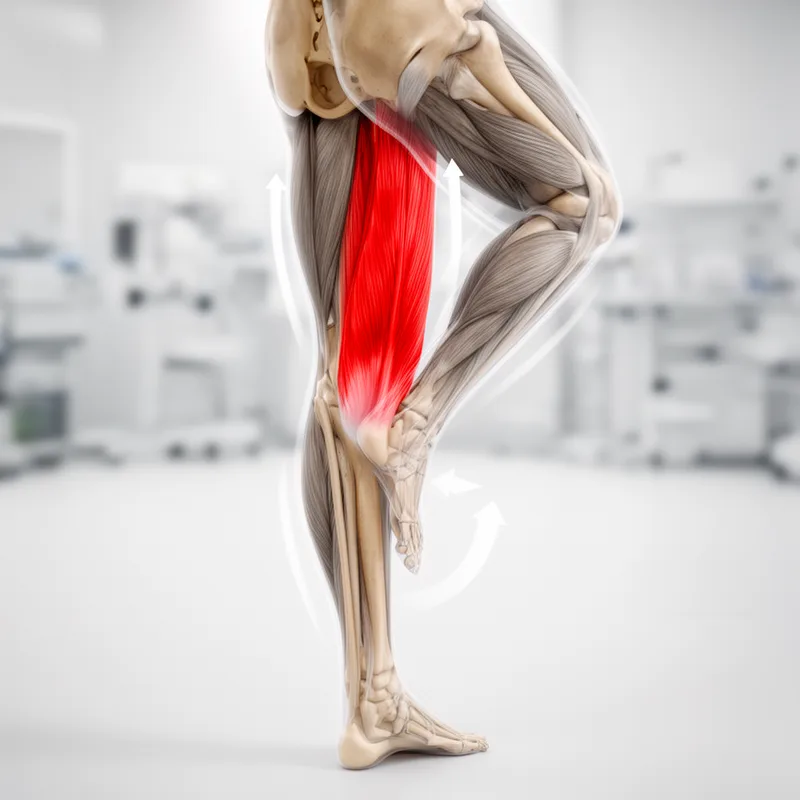
musculus biceps femoris
- noun
- /ˈmʌskjələs ˈbaɪsɛps ˈfɛmərɪs/
- Specialized
- After knee surgery, the strength of the musculus biceps femoris is crucial for proper rehabilitation.
Examples
-
The musculus biceps femoris is easily strained during intense running or sudden movements.
-
Anatomy students carefully identify the musculus biceps femoris during their dissections.
-
The musculus biceps femoris plays a key role in leg movement.
-
Strengthening the musculus biceps femoris can improve athletic performance.
-
After knee surgery, the strength of the musculus biceps femoris is crucial for proper rehabilitation.
-
Anatomy students carefully identify the musculus biceps femoris during their dissections.
-
The musculus biceps femoris is easily strained during intense running or sudden movements.
Synonyms
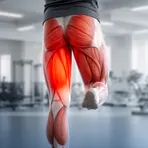
A muscle at the back of the thigh that bends the knee and turns the lower leg outward
How Big
- Specialized

 3
2.3
3
2.3

- Specialized

 1
9.2
1
9.2
- Specialized
4
3.4
Surface Forms
Morphology
musculus + biceps + femoris
This is a fully compositional anatomical Latin name: 'musculus' = muscle, 'biceps' = two-headed, and 'femoris' = of the femur/thigh, so the overall meaning (the two-headed muscle of the femur/back of the thigh) is directly derivable from the parts. Anatomical Latin naming is cross-linguistically regular, so a learner who knows the constituent roots can transparently infer the referent and basic function/location.
Etymology
Musculus biceps femoris comes from Latin and literally means 'two-headed muscle of the thigh'. The parts musculus ('muscle'), biceps ('two heads') and femoris ('of the thigh') explain why it is the muscle at the back of the thigh that helps 'bend the knee' and 'turn the leg outward'.