

femoral biceps
- noun
- /ˈfɛmərəl ˈbaɪsɛps/
- Specialized
- The femoral biceps plays a key role in bending the knee during walking or running.
Examples
-
Proper stretching can help prevent strains in the femoral biceps during intense physical activity.
-
An injury to the femoral biceps can significantly reduce an athlete's mobility.
-
The femoral biceps play a crucial role in leg movement.
-
Many athletes train their femoral biceps for better performance.
-
The femoral biceps helps to flex the knee and rotate the leg, which is essential for running.
-
After a rigorous workout, he felt soreness in his femoral biceps from all the squats.
-
To improve your athletic performance, it is important to strengthen the femoral biceps through targeted exercises.
Synonyms
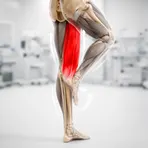
A muscle at the back of the thigh that bends the knee and turns the lower leg outward
Surface Forms
Morphology
femoral + biceps
The phrase is a straightforward adjective+noun anatomical naming: 'femoral' (thigh-related) specifies the location of 'biceps' (a two-headed muscle), so it denotes the biceps muscle of the thigh. This compositional pattern is regular and cross-linguistically common in anatomy, so a learner who knows both constituents can reliably infer the meaning.
Etymology
The term femoral biceps comes from Latin: femoral means 'of the thigh' and biceps means 'two-headed', because the muscle has two main parts. So femoral biceps is the two-part muscle on the thigh that helps to 'bend the knee' and turn the leg outward.

