
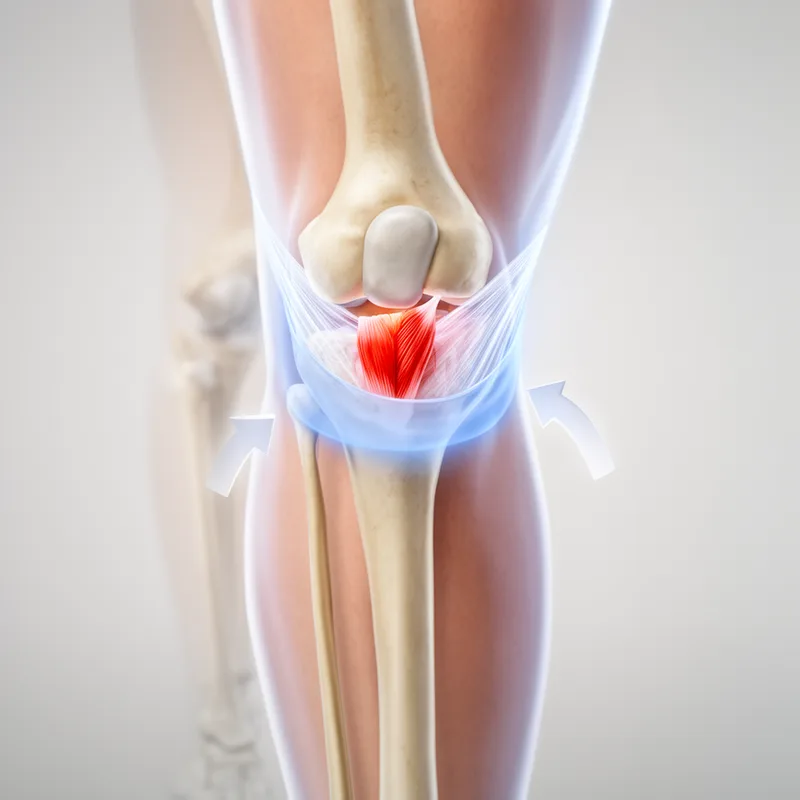
musculus articularis genus
- noun
- Specialized
- During leg extension, the musculus articularis genus lifts the synovial membrane.
Examples
-
The musculus articularis genus helps to prevent the synovial membrane from being pinched during knee extension.
-
Injury to the musculus articularis genus can sometimes cause discomfort around the front of the knee.
-
Anatomists study the musculus articularis genus to better understand knee joint movement.
-
The musculus articularis genus plays a crucial role in knee movement.
-
The musculus articularis genus assists in lifting the synovial membrane as the leg extends.
-
In the study of knee anatomy, the musculus articularis genus is important for understanding how the synovial membrane behaves during movement.
-
When the knee extends, the musculus articularis genus prevents the synovial membrane from getting pinched.
How Big
- Specialized

- Specialized
 4
3.4
4
3.4

Surface Forms
Morphology
musculus + articularis + genus
This is a technical Latin anatomical name: 'musculus' (muscle) and 'articularis' (related to joints / 'articular') give a partial hint that it is a muscle of a joint, so some component of the meaning is inferable. However, 'genus' as presented means a taxonomic rank (and is not transparently 'knee' — the expected Latin for knee would be 'genu'), so the full, specific sense (a small muscle of the knee lifting the synovial membrane) cannot be reliably derived by a B1 learner from the constituents alone.
Etymology
Musculus articularis genus literally names its parts: musculus meaning 'muscle', articularis meaning 'of the joint', and genus meaning 'knee'. This little muscle lifts the knee's lining when you straighten the leg so the lining is not pinched, which is why the name matches its job.