
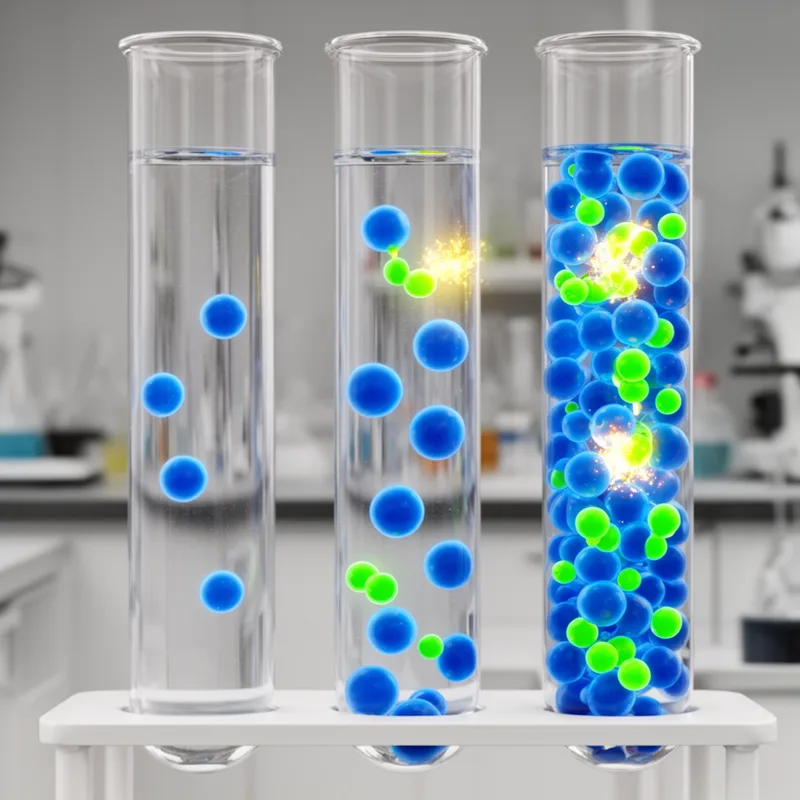
monomolecular
- adjective
- /ˌmɒnəˈmoʊkjələr/
- Specialized
- A monomolecular reaction depends on the concentration of only one reactant.
Examples
-
The rate law for a monomolecular process is first order with respect to the reactant.
-
Scientists studied the monomolecular breakdown of the compound under different conditions.
-
The monomolecular reaction was surprisingly fast.
-
Is this process monomolecular in nature?
-
The rate law for a monomolecular reaction only considers the concentration of one reactant.
-
Researchers discovered that the monomolecular reaction occurred at a constant rate when temperature remained stable.
-
In a monomolecular process, the breakdown of the compound is determined solely by a single molecule's interaction.
Synonyms
A chemical reaction that involves only one molecule
How Many Molecules

Surface Forms
Morphology
Etymology
Monomolecular combines the prefix mono- meaning 'one' and molecular from molecule meaning 'tiny part', so in chemistry it describes a reaction where only one molecule affects the reaction speed.

