
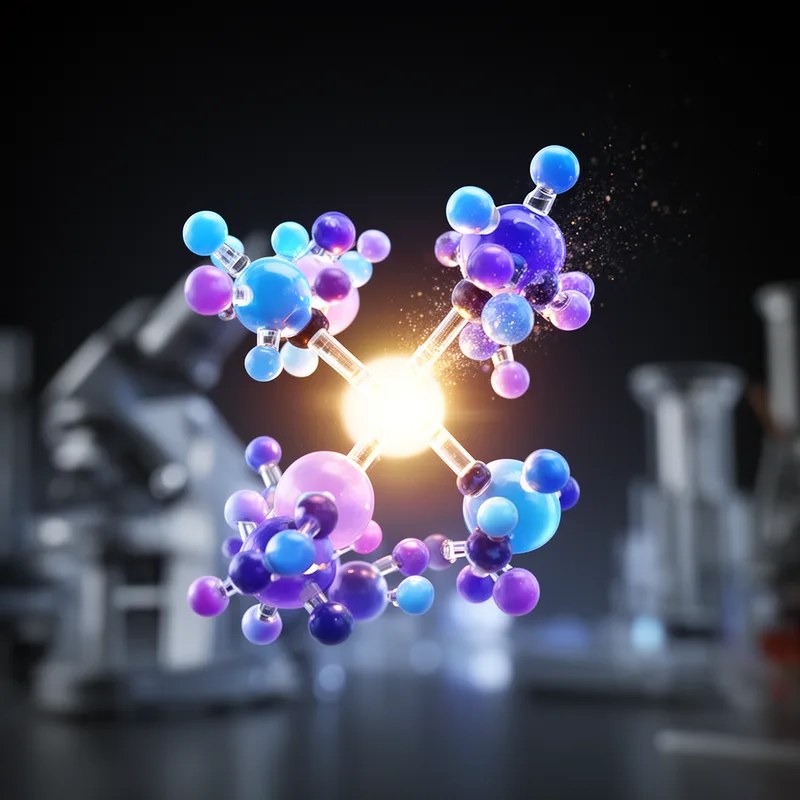
unimolecular
7.3
A chemical reaction that involves only one molecule
- adjective
- /ˌjuːnɪˈmoʊkjələr/
- Specialized
:
unimolecular
- So the first reaction is called unimolecular because there's only one thing reacting.
Examples
-
In a unimolecular reaction, a single molecule undergoes a transformation without any direct interaction with other molecules.
-
Chemists often study unimolecular processes to understand how a single molecule can initiate a reaction.
-
One example of a unimolecular reaction is the decomposition of hydrogen peroxide into water and oxygen.
Synonyms
9.2
A chemical reaction that depends on how much one substance is present
is broader, meaning a single molecule is involved in any part of a reaction
Antonyms
How Many Molecules

Surface Forms
unimolecular positive
Morphology
Etymology
Unimolecular combines uni- 'one' and molecule 'tiny particle', like the uni- in unicycle which means 'one'. So a unimolecular reaction involves just a single molecule doing the work.

