
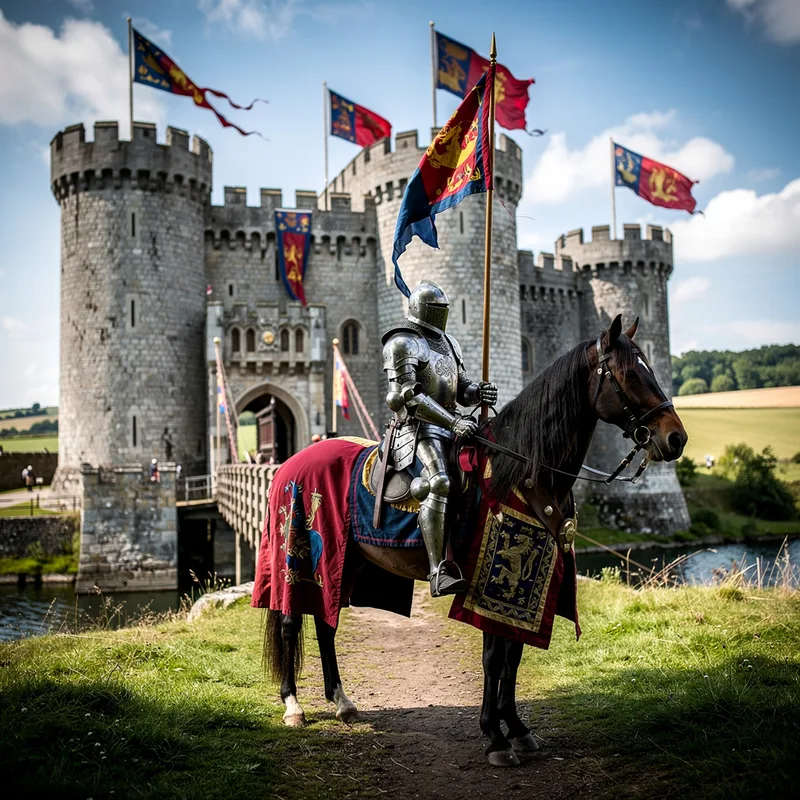
medieval
 14
6.5
14
6.5

- adjective
- /ˌmɛdɪˈivəl/
- The knight's code of honor was deeply rooted in medieval traditions of chivalry.
- medieval philosophy
- medieval knights
- medieval quest
Loading YouTube…
Watch on YouTubeAnd things have, you know, sort of devolved to essentially kind of a feudal, medieval sort of level with, with some advanced technology in it.
- And things have, you know, sort of devolved to essentially kind of a feudal, medieval sort of level with, with some advanced technology in it.
- So they just use like medieval catapults, bro, you know that?
Examples
-
The principle of fee simple absolute is derived from medieval law, and it flourished in Anglo-Saxon Britain.
Academic text (1993) -
I imagine you like a medieval knight on a quest.
-
She'll make a great addition to your staff at Medieval Times.
-
Looks like a medieval warrior.
-
We'll be just like medieval knights defending the castle.
-
The altars were turned from the wall where they had been since medieval times.
Academic text (2014) -
This is sainthood in the medieval Roman Catholic sense.
-
As you guys know, I live a real-deal authentic medieval lifestyle.
-
In the broadest sense of the term, medieval Scandinavia was a feudal society.
Academic text (2000) -
Some northern orators also credited medieval chivalry with creating a more sentimental view of women.
Academic text (2014)
Synonyms
 19
7.7
19
7.7
A system where lords own land and farmers work it for protection
 1
9.9
1
9.9
Having the courage, honour, and manners of knights in the Middle Ages
 1
8.0
1
8.0
About knights and the Middle Ages of honor and bravery


 1
9.5
1
9.5
A society where a few owners of land have power and many people work for them

Belonging to the Middle Ages, about the 5th to late 15th century
Compounds
 1
9.9
1
9.9
A form of Latin used in Europe for writing, study and church work in the Middle Ages



Surface Forms
Etymology
Medieval comes from the Latin parts medium 'middle' and aevum 'age', so it names the 'middle age' when knights, castles, and chivalry were common. That's why medieval is used to describe the customs, feel, or style of knighthood and feudal society.