
medieval
 96
5.9
96
5.9

- adjective
- /ˌmɛdɪˈiːvəl/
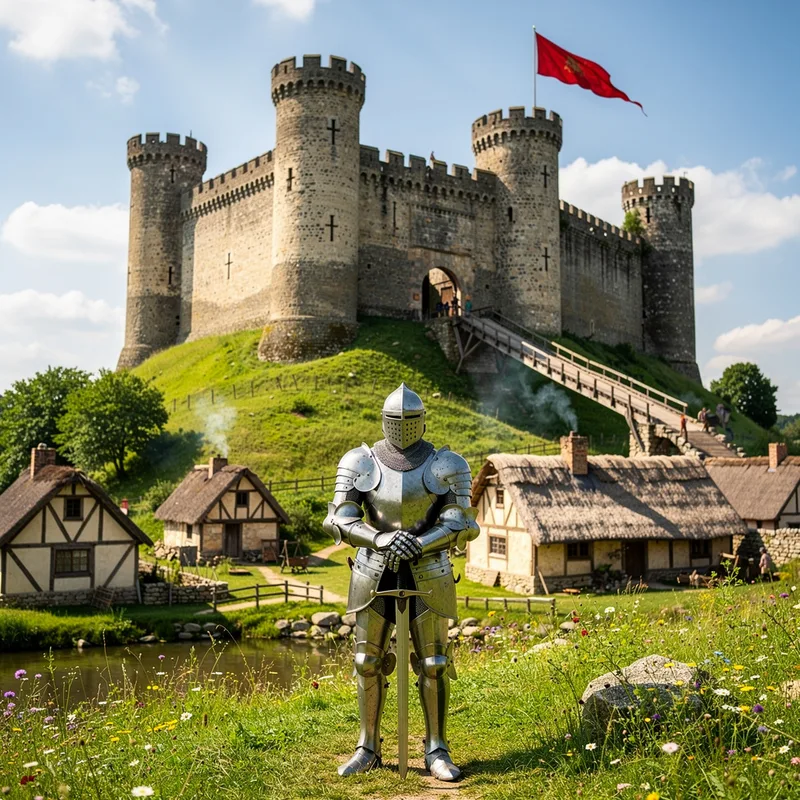
- The medieval castle stood majestically on the hill, reflecting the architectural style of the Middle Ages.
- medieval period
- late medieval
- early medieval
Loading YouTube…
Watch on YouTubeThere's going to be people like that in medieval society as well.
- There's going to be people like that in medieval society as well.
- That's the question for the ages, at least for the medieval ages.
- Guys, we should go to Barnes and Noble and buy some medieval looking journals and novels.
- That's just not the way that medieval art works in in most cases.
- This is again, this goes back to medieval Europe as well.
- So was in medieval connections in commerce.
- Students made Oxford the murder capital of medieval England.
- We, we just haven't learned it since medieval times.
Examples
-
How in the late medieval world did the Renaissance begin?
-
They didn't do that back in medieval times.
-
And that would be medieval history.
-
Now, the initial structure is late medieval in style...
-
Next, the medieval town hall, which still exists.
-
The world's largest medieval castle complex?
-
Whenever medieval workers could afford to stop working, they did.
-
Many of May's dishes, as we have seen, followed a medieval tradition of sweet, heavily spiced food.
Academic text (2011) -
Students often study medieval literature to understand the cultural context of the period between 500 and 1500 AD.
-
During the medieval era, many towns were built with narrow streets and stone buildings.
Synonyms

Belonging to the Middle Ages, about the 5th to late 15th century
Compounds
 1
9.9
1
9.9
A form of Latin used in Europe for writing, study and church work in the Middle Ages



How Modern

Surface Forms
Etymology
Medieval comes from the Latin words medium 'middle' and aevum 'age', so it literally means 'middle age'. It refers to the period in European history between ancient and modern times, about AD 500 to 1500, which is why we use it for that historical era.