

marram
- noun
- UK
- In areas prone to wind erosion, marram provides essential support by anchoring the loose sand with its roots.
- marram grass
Examples
-
Marram grass grows on sandy beaches, where it helps prevent erosion by stabilizing the marram dunes.
-
The coastal landscape is often dominated by marram, which plays a vital role in protecting the shoreline.
-
He wove his way furtively through shrubs and loosestrife, through reeds and marram.
Fiction book (1997)
Synonyms


 1
3.7
1
3.7
A tough grass with strong roots that grows on sandy shores and stops sand dunes from moving

A grass that grows on sand dunes and holds them together

A dune grass that grows on Pacific beaches to hold sand and stop erosion

A tough grass that grows on sand near the sea to hold the dunes in place

A grass that grows on sandy coasts and helps keep sand from being carried away by wind or water

A coarse grass that grows on sandy shores and keeps sand in place
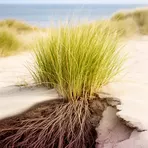
A grass from Europe that grows on sand and holds dunes together
Surface Forms
Etymology
Marram names the tough grass that grows on sand dunes and keeps the sand from moving, and it probably comes from old northern European words for shore plants. A helpful way to remember it is to think of mar- like in 'maritime' meaning 'sea', so marram is the sea-side grass that 'holds' the sand.