

mannerism
 1
6.5
1
6.5

- noun
- /ˈmænərɪzəm/
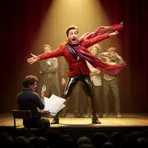
- Her exaggerated hand gestures and vocal inflections during the presentation were clear mannerisms meant to impress the audience.
Examples
-
He had perfected mannerisms and verbal techniques to defuse their paranoia, stomach pains, and even boredom.
Fiction book (1991) -
Sometimes artists of that ilk have eccentric mannerisms.
-
While this mannerism could be used for dramatic effect, it became obvious that this was central to his vocal technique.
Blog text (14) -
And the mannerisms when she does Lucy on the show, yeah, is spot on.
-
Even I could not believe the exaggeration of her mannerisms.
Fiction book (1994) -
That amazing delivery she had was so uncluttered with mannerisms.
Fiction book (1999) -
"He throws a kiss like a young girl, a grossly exaggerated mannerism."
Fiction book (2002) -
He crossed his arms tightly over his chest, as he always did when he was reflective, a mannerism.
Fiction book (1996) -
When James Doohan tried out a Scottish accent, the character of ML Scott was born, complete with stereotyped national mannerisms.
Academic text (1995) -
In the future, you'll go to the library and talk to Winston Churchill because all his speeches, his mannerisms, his memories, his letters have been digitized.
Synonyms
 72
5.1
72
5.1
A way of showing yourself that hides problems to make others think well of you
 34
7.0
34
7.0
Behaving to impress people instead of being honest
 32
7.7
32
7.7
Confident, showy behavior meant to impress or hide fear
 22
7.0
22
7.0
A way of behaving that is not genuine to impress others
 11
8.6
11
8.6
A fake way of speaking or behaving to impress others
 6
7.7
6
7.7
A way of acting like you are very important that annoys other people
 6
9.1
6
9.1
Very dramatic behavior that tries to get attention
 5
6.3
5
6.3
An act of trying to get attention by doing dramatic moves
 4
7.7
4
7.7
A very bright and fancy style that attracts attention in dress or manner
 2
7.7
2
7.7
Acting like you are more important or more educated than you really are
 2
8.1
2
8.1
Doing dramatic things to get attention or praise
 1
7.9
1
7.9
A way of behaving that tries to show you are better than other people


 1
9.2
1
9.2
Too much praise that tries to make people like you
 1
7.2
1
7.2
A person's exaggerated emotional behavior often shown in speech or acting
 1
9.9
1
9.9
A loud, showy kind of acting that looks fake and draws attention

Acting in a fake or showy way to impress other people

A way of acting or speaking that does not feel sincere

A false friendliness that tries to please or impress people

A way of speaking that is too friendly and seems not sincere

Speaking in a smooth, confident way that does not seem sincere

Acting in an exaggerated, showy way that feels loud and not natural

A way of behaving that is dramatic and exaggerated to attract attention

Showing feelings or opinions too strongly so they seem not sincere

A quality of looking overly artistic and trying to impress rather than feeling natural
Antonyms


How Affected

Surface Forms
Morphology
Etymology
Mannerism can also mean a deliberate or exaggerated 'way' of behaving used to impress other people. It comes from manner ('way') and -ism ('a style'), so a mannerism in this sense is a showy habit people use to show off or hide true feelings.