
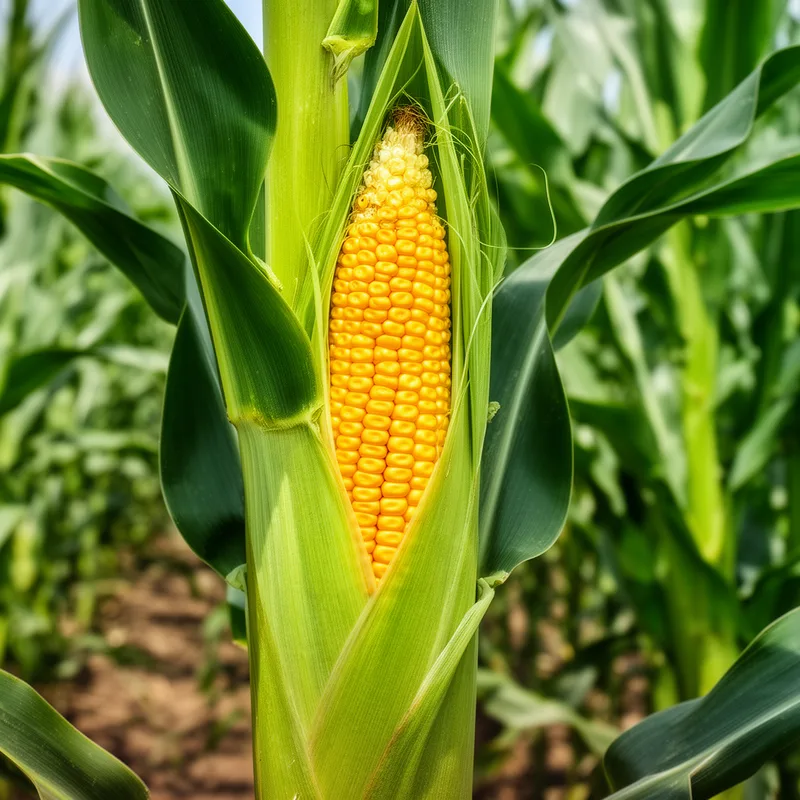
maize
 12
1.9
12
1.9

- noun
- /meɪz/
- The First Generation was the commodity crops: soybean, maize, cotton, canola, sugar beets.
- maize silage
- maize crop
- maize cultivation
Loading YouTube…
Watch on YouTubeSo they're these harvest cycles, farmers like farm maize in this area.
- So they're these harvest cycles, farmers like farm maize in this area.
Examples
-
We must also remember that maize was not rejected outright by most Spaniards and Italians.
Academic text (1992) -
They are just selling their maize.
-
I need you to sell maize to feed your brothers!
-
Our native American friends taught us the many uses of maize.
-
And one would therefore expect the US, which is providing half of the world market of maize, to become a net importer.
-
There were no tomatoes, potatoes, or maize in Europe before the discovery of the New World.
Academic text (2008) -
the US is the world's largest producer of maize, what Americans call corn.
-
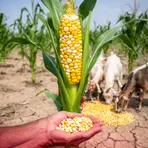
A farmer stands in his maize field near the town of Bungoma, in western Kenya.
Academic text (2008) -
In South Africa, researchers have engineered corn that is resistant to the maize streak virus.
Academic text (2012) -
A farmer stands in his maize field near the town of Bungoma, in western Kenya.
Synonyms

Compounds

- Specialized
A drought-resistant grain plant like corn with large yellow or white seeds for food and feed
How Tall

Surface Forms
Etymology
Maize comes from the Taíno word mahiz, which passed into Spanish as maíz and then into English. It was the main grain of the Americas, so the name came to mean the plant and its seeds.