
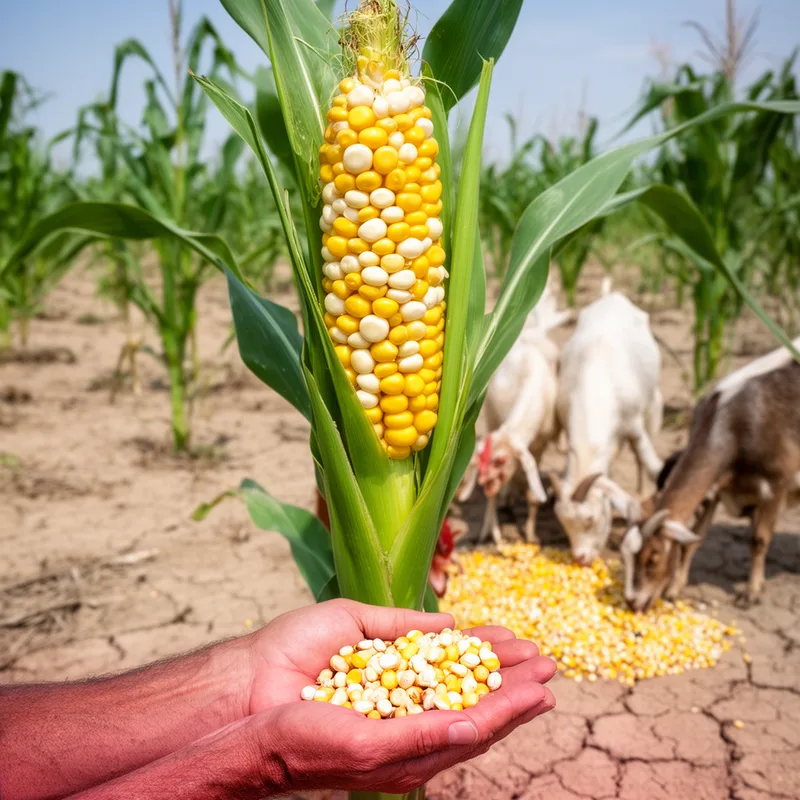
milo maize
- noun
- Specialized
- Farmers in dry regions often grow milo maize because it thrives with little water.
Examples
-
The large grains of milo maize are used as animal feed and for food production.
-
Farmers in Africa often grow milo maize for its drought resistance.
-
This hybrid of milo maize is prized for its resistance to drought and heat.
-
Did you know that milo maize can survive in arid conditions?
-
Farmers in dry regions often grow milo maize because it thrives with little water.
-
The large grains of milo maize are used as animal feed and for food production.
-
This hybrid of milo maize is prized for its resistance to drought and heat.
Synonyms

 5
7.1
5
7.1

A tall grass grown in warm regions for grain, animal feed, and syrup
 1
9.1
1
9.1
A grain plant with large yellow or white seeds grown to feed animals in dry areas


 1
6.1
1
6.1
A tall plant grown for small edible seeds used for food or animal feed
Surface Forms
Morphology
The compound combines two crop nouns ('milo' = grain sorghum, 'maize' = cereal/corn), so its meaning as a type of cereal/grain used for feed and grown in drought conditions is directly inferable from the constituents. Noun–noun compounding for crop varieties is a transparent, cross-linguistically common pattern, so a B1 learner who knows both words would understand the basic sense.
Etymology
Milo maize comes from two farm words: milo, a name farmers use for sorghum, and maize, another word for 'corn' or 'grain'. So the name gives the image of a corn-like plant that can grow with little water and has large kernels used as 'animal feed', which is why it means a hardy sorghum grown for grain and fodder.