

magister
 4
9.9
4
9.9

- noun
- /ˈmædʒɪstər/
- Literature
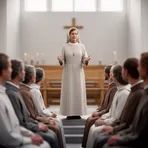
- The magister presided over the council, guiding the discussions on governance and law.
Examples
-
Most of what he was familiar with were Magister Bruen's operations.
Fiction book (1992) -
The magister was to make all major decisions affecting the institution with the advice and consent of the collegium.
Academic text (2006) -
Actually, Mr. Greene, while I have you, any word back from your alma mater, the Magister Mundi Academy?
-
They required that the brothers and sisters elect their magister and stipulated that he should be a leper himself.
Academic text (2006) -
In ancient Rome, the role of a magister was essential for maintaining the administration of the empire.
-
As a magister of the medieval university, he wielded significant authority over academic matters.
Synonyms
 132
8.9
132
8.9
The leader of a religious order who looks after many communities
 102
4.9
102
4.9
A person who has higher rank or authority in a group
 4
4.2
4
4.2
A person with more power in a company or group
 3
8.4
3
8.4
A person who is the most important leader in a group or organization
 2
7.6
2
7.6
The senior cardinal who leads the College of Cardinals and its ceremonies
 1
9.9
1
9.9
A person who has a high position in a church or other group

 1
9.6
1
9.6
The head of a religious group who leads the whole community

A civil official who governs a region or office in ancient Rome

A high official chosen from outside to lead and judge in Italian cities in the Middle Ages

A main ruler or leading citizen in ancient Rome

A military commander in ancient Rome who led the army

A noble or official with special royal powers

A man who owned and ruled land and the people who worked it in old times
Antonyms

Compounds

- Specialized
A large crab from the Pacific coast of North America that people eat

How High-Ranking

Surface Forms
Etymology
Magister comes from Latin magis 'more' or 'greater' and meant 'the greater one' in a group, so it was used as a title for people in charge. That's why magister became an official title for high officers and leaders.