

lycanthropic
- adjective
- /ˌlaɪkənˈθrɒpɪk/
- Specialized
- In the story, the protagonist experienced a lycanthropic transformation under the full moon, becoming a wolf at night.
Examples
-
Wolf (1994) features Jack Nicholson as a lycanthropic editor-in-chief fending off the challenge of a younger editor on the make, played in full feral-yuppie mode by James Spader.
Academic text (2016) -
Two months ago, he was sure he had discovered... a serum to suppress my lycanthropic cycle.
-
The ancient legend described a lycanthropic creature that roamed the forests, feared by all who heard its howls.
-
In the movie, the main character grapples with his lycanthropic nature, struggling to control his wolf-like instincts.
Synonyms

 1
6.9
1
6.9

Looking or acting like a wolf, often in a threatening way
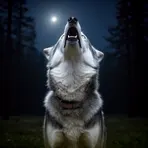
Like a wolf in look or behaviour
How Wolf-Like

Surface Forms
Morphology
lycanthropic = lycanthropy (opaque) = lycanthropy + ic
The adjective is formed from the noun 'lycanthropy' using the productive suffix '-ic' meaning 'relating to'.
Etymology
Lycanthropic comes from Greek roots lycan- ('wolf') and anthropos ('man'), so it literally means 'wolf-man'. That's why the word describes a person or thing that looks like a wolf or seems to change into one.