
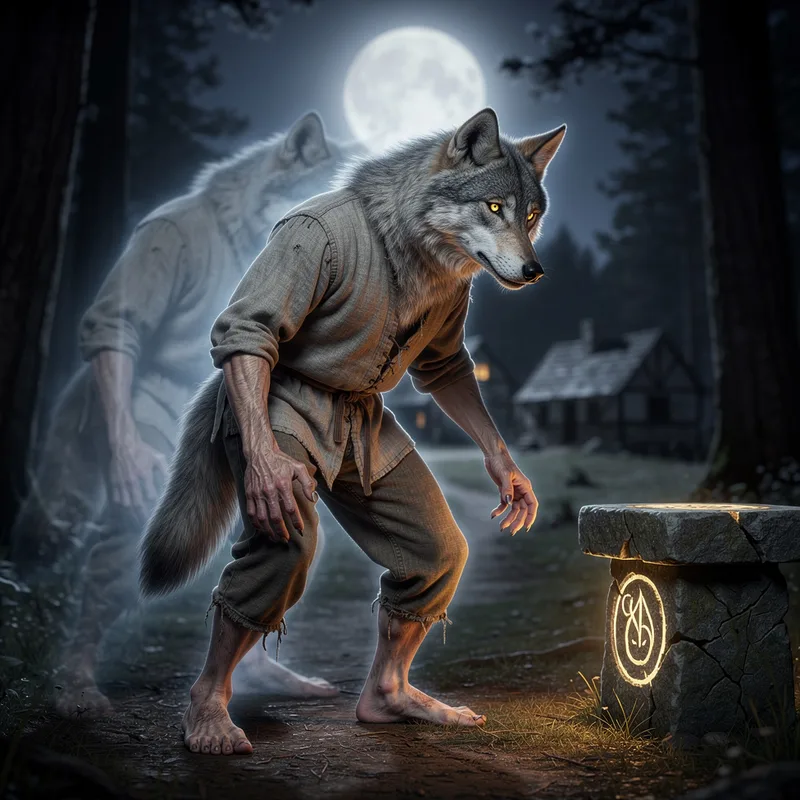
lycanthropy
 3
9.9
3
9.9

- noun
- /laɪˈkænθrəpi/
- Literature
- Many stories in folklore discuss lycanthropy as a magical transformation into a wolf during the full moon.
- cure for lycanthropy
Examples
-
Yes, they say heredity sometimes plays a role in lycanthropy.
-
With ADM, we can wipe out lycanthropy, the curse of the werewolf, forever.
Fiction book (1997) -
What do you know about lycanthropy?
-
"All of us here at the Lycanthropy Institute truly believe that your condition exists, and we have in fact developed a method to cure it."
Fiction book (1997) -
Tonight the full moon would rise, bringing his last chance to be cured of lycanthropy.
Fiction book (1992) -
- People with lycanthropy usually don't wanna give up the power, it's a privilege to be chosen.
-
Many cultures and religions believe the moon and its phases have significant influence on us, especially those suffering from lycanthropy.
Blog text (28) -
Nick Lupo, for example, contends with numerous problems related to his lycanthropy.
Academic text (2011) -
"Lycanthropy is affected by the moon's light... and depending on the moon's breadth..."
-
- If you know anything about lycanthropy, then you know that being able to transform into a wolf doesn't automatically induce the terminology werewolf.
Synonyms

 1
9.9
1
9.9
The belief that someone can turn into a werewolf
Surface Forms
Morphology
lycanthropy = lycanthrope (semi-transparent) = lycanthrop + y
Formed from 'lycanthrope' + '-y' (state or condition), which is a regular nominal formation, but the combining element 'lycanthrop-' is rare and Greek-derived, so the parts are not fully transparent to average learners.
Etymology
Lycanthropy comes from Greek parts lykos 'wolf' and anthropos 'man'. So it means 'wolf-man' and explains why the word describes the idea of changing from a human into a wolf.