
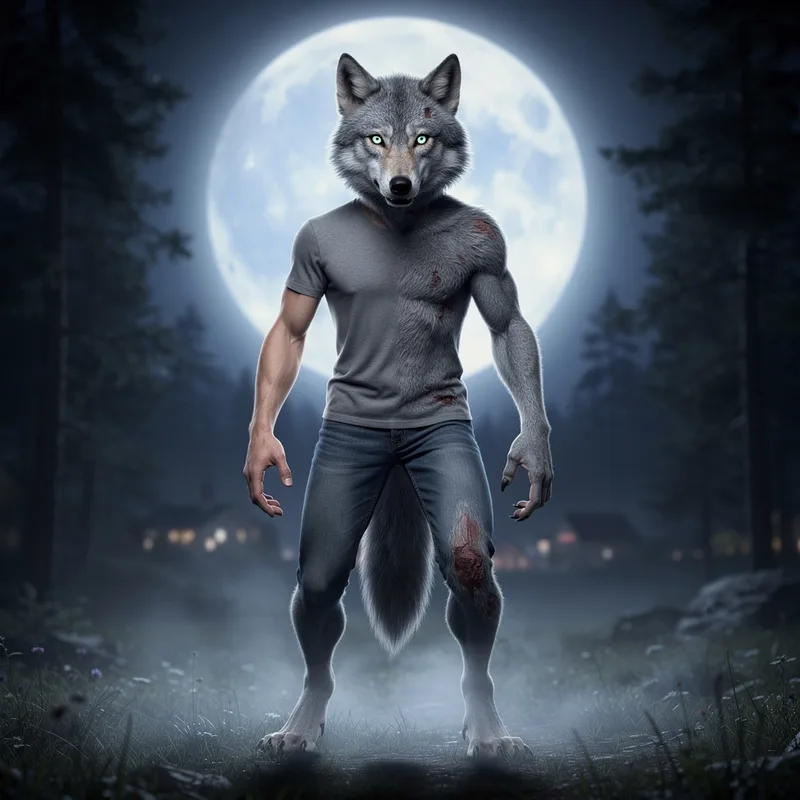
lycanthrope
 2
9.9
2
9.9

- noun
- /laɪˈkænθroʊp/
- Literature
- Legends tell of a lycanthrope who transforms under the light of the full moon.
- vampires and lycanthropes
Examples
-
During the full moon, the village feared the lycanthrope that roamed the woods at night.
-
He's a lycanthrope in human form.
-
Well, officer, it looked like a lycanthrope to me, sir.
-
The Lycanthrope let go of her, a little victory, and likely to be her last.
Fiction book (2001) -
Except for the Lycanthrope, who kept his hungry eyes fixed on her.
Fiction book (2001) -
We were attacked by a lycanthrope... a werewolf.
-
We are known as lycanthropes.
-
You might say I feel a certain kinship with lycanthropes.
Academic text (2011) -
Despite his speed and cunning, the Lycanthrope could not get past the flashing blade.
Fiction book (2001) -
The Lycanthrope stood waiting, aching to use his fangs and claws.
Fiction book (2001)
Synonyms
 94
7.9
94
7.9
A person who changes into a wolf during a full moon
 8
9.3
8
9.3
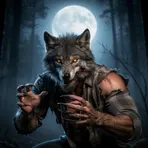
A person who turns from a human into a wolf during the full moon

A person who turns into a wolf and back
Surface Forms
Etymology
Lycanthrope comes from the Greek parts lykos meaning 'wolf' and anthropos meaning 'human'. So a lycanthrope is literally a 'wolf-man', a person who can change from a human into a wolf.