

Lord
 306
4.8

- noun
- /lɔrd/
- UK
- In England, a lord often takes on responsibilities related to governance and land management.
- lords and ladies
- feudal lords
- meetings of the lords
Loading YouTube…
Watch on YouTubeFail not our feast, my Lord, I will not.
- Fail not our feast, my Lord, I will not.
- And so he's a, he's Lord Montague's nephew.
- I connect with Alan Sugar, Lord Alan Sugar.
- All right, You got to know that Lord D he came in.
Examples
-
We honor Lord May of Oxford, Robert May.
-
It will be an honor to fight for you, my lords.
-
Tenancy was only granted by the lord to people who were married or were willing to marry.
Academic text (1995) -
Please welcome my good friend, Professor the Lord Robert Winston.
-
"I can resume work any time you wish, my lord," he assured the earl.
Fiction book (1991) -
In fact, certain flowers were reserved for lords and outstanding warriors.
Academic text (2011) -
"I am an alchemist, my lord, and body parts are often useful in my occupation."
Fiction book (1991) -
Two aristocratic men facing the enthroned lord pay homage to the lord and converse with him.
Academic text (2003) -
The king's prominent place on the monument suggests that Yaxchilan's subordinate lords were under the king's strict supervision.
Academic text (2011) -
The lords of the realm gathered to discuss matters of state during the emergency meeting.
Synonyms
 42
5.3
A person from a high social family with a title
 18
5.6
A man from a high social class who has a title
 4
8.6
A noble person with a title who sits in the House of Lords


 1
9.9
A British noble who can sit in the House of Lords
Antonyms
- UK
12
2.5
A woman who has a noble title in Britain, for example the wife or female partner of a lord
Idioms
 1
9.9
An informal phrase to show hope that something will happen if nothing goes wrong

- Formal
1
9.9
To die as a Christian who trusts in God and expects life after death

Compounds


- Literature
8
6.6
A situation where people become violent and rules break down, like in the novel

- Formal
6
8.2
The year in the Christian calendar used when writing dates like AD 1865
 3
8.6
A senior government official in the United Kingdom who leads the courts and presides in the House of Lords


 1
9.9
A senior UK government official who has an old title, no set duties, and sometimes has extra responsibilities


 1
9.9
A senior government officer in the United Kingdom who leads the courts and chairs the House of Lords

- Archaic
1
9.9
A person who holds land from someone above them and rents it to other people
 1
8.4
A Christian festival twelve days after Christmas to remember the visit of the wise men to the baby Jesus
 1
7.7
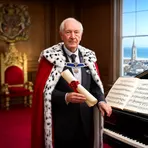
A senior government minister responsible for economic strategy, usually the prime minister
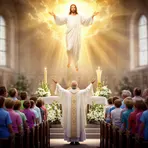
A Christian holiday marking Jesus going up to heaven forty days after Easter

Surface Forms
Etymology
Lord comes from old English parts hlaf and weard, meaning 'loaf' and 'guardian'. Because a lord was originally the one who provided and protected the household, the word grew to mean a man with authority and land, which is why a noble is called a Lord.