
lobstering
 1
3.9
1
3.9

- noun
- /ˈlɑːbstərɪŋ/
- US
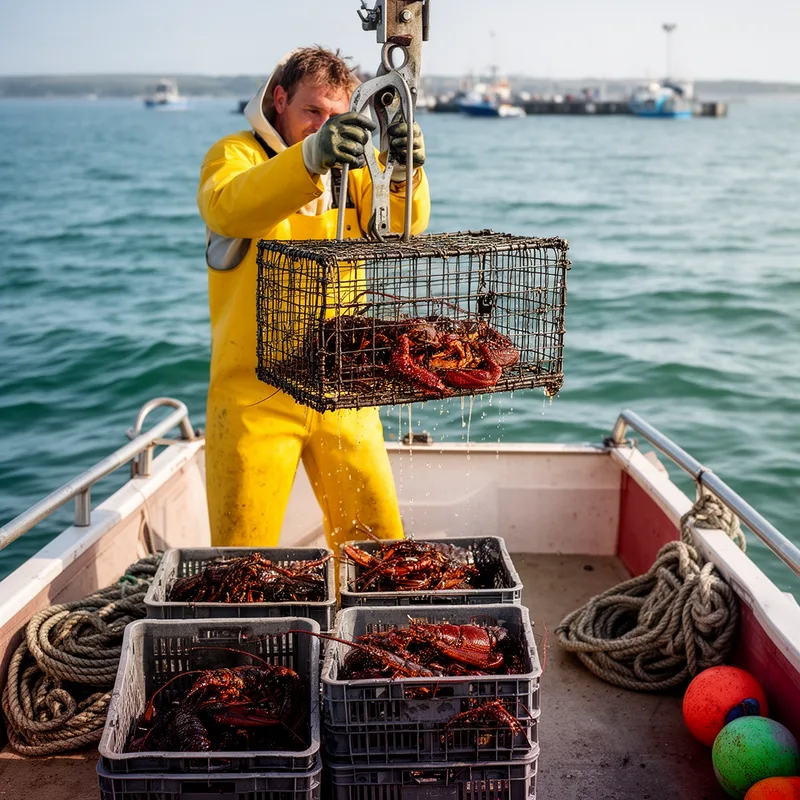
- Every summer, tourists flock to the coast to experience lobstering firsthand, often going out on boats with local fishermen.
- go into lobstering
Examples
-
Watson believes that other solutions to the impending collapse of the lobster population are to reduce the number of licenses and traps permitted or to impose definite parameters on the lobstering season.
Academic text (2000) -
During the decade, gillnet, eel, and pound-net fisheries diminished, while lobstering remained at the same status.
Academic text (1990) -
Fishermen claimed they would not have earned sufficient money lobstering had they not sold them.
Academic text (1990) -
In the 1800s, the type of boat used for lobstering was the catboat.
Academic text (1990) -
In the early 1960s, when the fishery for scup ended and hard clamming was curtailed substantially, many fishermen went back to lobstering.
Academic text (1990) -
In 1980, the two dominant commercial fisheries in Highlands were soft clamming and lobstering, with smaller ones being gill netting and eeling.
Academic text (1990) -
Sometime after the mid-1800s, improved gears for gathering hard clams and soft clams were developed, and lobstering and blue crab dredging were documented.
Academic text (1990) -
Many families in Maine earn their living through lobstering, setting traps in the ocean to catch lobsters.
-
The lobstering industry plays a crucial role in the local economy, providing jobs and fresh seafood.
Surface Forms
Morphology
Etymology
Lobstering comes from the name lobster, which itself comes from an old word locusta, the same root as the English word locust because people long ago thought the sea creature looked a bit like a large insect. So, lobstering simply means the activity of catching lobsters.