

to live on
 38
3.2
38
3.2

- phrasal verb
- /lɪv ɑn/
 :
sobrevivir
:
sobrevivir
- May your name live on forever and ever.
- still live on
- live on for decades
So why not have these stars live on through our fantasies?
- So why not have these stars live on through our fantasies?
- And either way, I'll live on for my work, I'll live on for my children, grandchildren.
- The training contract you, you, you, you did with us lives on for your next company.
Examples
-
But her legacy lived on, inspiring others to stand up to their oppressors, speaking out, no matter what the cost.
-
Despite the hardships they faced, the family was determined to live on and cherish their memories.
-
But he lives on in his movies.
-
And for five years, I lived on that ship with its soldiers, who were my only family.
-
More than one billion people in the world live on a dollar a day or less.
Academic text (2000) -
My dad thinks that I'm old enough to live on my own.
-
Children engage in various activities to survive, and face great risks when living on the street.
Academic text (2002) -
And either way, I'll live on for my work, I'll live on for my children, grandchildren.
-
I suppose the point is individual Crawleys come and go, but the family lives on.
-
The new male's legacy will live on while the monogamous male's lineage, sadly and unbeknownst to him, comes to an end.
Synonyms
 ∞
1.0
∞
1.0
To continue to be alive
 ∞
1.0
∞
1.0
To continue for a period of time
 ∞
2.7
∞
2.7
Continue to exist after a dangerous or difficult event
 94
3.6
94
3.6
To continue to exist for a long time despite problems
 11
7.2
11
7.2
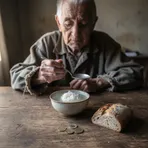
Manage to live with very little food or money
Antonyms

How Resilient

Surface Forms
Morphology
The meaning 'to survive or continue to exist using or relying on a particular resource or income' is directly and compositionally derived from 'live' (to continue to exist/survive) plus the particle 'on' (indicating reliance or use of something). This verb + particle pattern (e.g., 'live on bread', 'live on a salary') is frequent and cross-linguistically familiar, so a B1 learner who knows the constituents will readily infer the meaning.
Etymology
Live on comes from the simple image of life that keeps going after danger: live plus on shows someone still alive and carrying on after an accident or loss. That's why it means 'to survive' or 'to continue to exist'.