

to live on
 61
3.2
61
3.2

- phrasal verb
- /lɪv ɑn/
- In the United States, many come from homes where they live on or below the poverty level.
- live on less
- live on a pension
Loading YouTube…
Watch on YouTubeSo Apple's larger models live on Apple built servers.
- So Apple's larger models live on Apple built servers.
- And like you pretty much live on a diet now of like beef and salt.
- And I wanted to talk about the the thought that plants can live on compost alone.
- OK, next, now you have your money that you live on.
- And so you learn, like, how to live on nothing while pursuing, you know, a passion.
Examples
-
And many of them live on one meal a day or even not at all.
-
After his release, Atkins says he was forced to live on $220 a month in state aid and food stamps.
Academic text (2011) -
And what was I supposed to live on?
-
I live on the streets.
-
People must again learn to work instead of living on public assistance.
-
Nearly 100 million people within these basin countries live on less than a dollar a day.
Academic text (2008) -
They live on the money I send them.
-
Moses asks in Uganda, where people dream big but live on less than a dollar a day.
-
I'm living on canned food and I've taken up smoking because, why not?
-
Many families in the city live on less than $1,000 a month.
Synonyms
 425
2.7
425
2.7
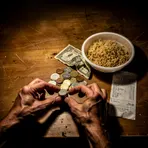
Manage to live on very little money
 77
3.9
77
3.9
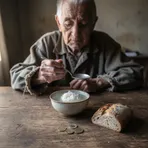
Rely on someone, a job, or savings for the food and money you need
 11
7.2
11
7.2
Manage to live with very little food or money
How Sustained

Surface Forms
Morphology
The meaning 'to survive or continue to exist using or relying on a particular resource or income' is directly and compositionally derived from 'live' (to continue to exist/survive) plus the particle 'on' (indicating reliance or use of something). This verb + particle pattern (e.g., 'live on bread', 'live on a salary') is frequent and cross-linguistically familiar, so a B1 learner who knows the constituents will readily infer the meaning.
Etymology
Live on comes from the picture of a person who uses one food or a small amount of money to get by: live plus on shows life that is supported by that thing, like living on rice or a fixed income. That's why it means 'to survive using' a particular food, money, or resource.