

lepidopterous insect
- noun
- /ˌlɛpɪˈdɒptərəs ˈɪnsekt/
- Specialized
- The museum's collection includes many rare lepidopterous insects from tropical regions.
Examples
-
Researchers are studying how climate change affects the distribution of lepidopterous insects.
-
The lepidopterous insect fluttered gracefully among the flowers.
-
A lepidopterous insect can be easily identified by the fine scales that cover its wings.
-
Lepidopterous insects play a crucial role in pollination.
-
A lepidopterous insect like the common swallowtail butterfly flutters gracefully among the flowers.
-
Many gardeners plant flowers to attract lepidopterous insects, such as butterflies and moths.
-
In the summer, we often see a variety of lepidopterous insects visiting our backyard, especially at dusk.
Synonyms



 1
9.8
1
9.8
An insect like a butterfly or moth with four wings covered in tiny scales

An insect with four wings covered in tiny scales, like butterflies and moths
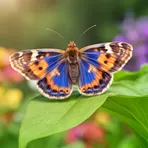
An insect like a butterfly or moth
Surface Forms
Morphology
lepidopterous + insect
The phrase is a straightforward adjective+noun composition: 'lepidopterous' (relating to Lepidoptera / having scaled wings) modifies 'insect', so the meaning 'an insect of the Lepidoptera (butterflies and moths)' is directly derivable from the parts. Note that 'lepidopterous' is a technical, low-frequency adjective unlikely to be known by a typical B1 learner, but given knowledge of that constituent the compound is fully compositional and transparent.
Etymology
The noun lepidopterous insect comes from old word parts lepido meaning 'scale' and pterous meaning 'wing' because these insects have tiny scales on their wings that look like fine dust. So, a lepidopterous insect is simply a 'butterfly or moth'.