

lepidopteran


 1
9.8
1
9.8
- noun
- /ˌlɛpɪˈdɒptərən/
- Specialized
- For example, Watt and colleagues (1995) showed that under temperature increases that mirror those forecast in climate change scenarios, vegetation consumption by herbivorous lepidopteran and orthopteran species increased between 25% and more than 100% above the levels observed under extant temperatures.
- lepidopteran scales
Examples
-
The regressions were nonlinear for British and linear for Canadian data, with the latter falling generally below the former, suggesting that British trees have higher loadings of both kinds of lepidopterans.
Academic text (1996) -
Because there are as yet no completely equivalent data for the other groups of herbivores (e.g., aphids and lepidopterans), it is not possible to say unequivocally that European woody plants have higher loading of all herbivore species.
Academic text (1996) -
Twelve Lepidopteran families were represented by a single species.
Academic text (2010) -
Likewise, most of the members of the largest group of adventive lepidopterans, the family Tortricidae (Table 5), are early spring feeders.
Academic text (1996) -
Likewise, you wouldn't have a problem with lepidopteran insect pests, so you wouldn't be paying anything for a Bt trait.
Blog text (14) -
In the public mind, however, an indelible mental picture remains of an unmediated causal chain from lepidopteran to storm, in the sense that I can be held responsible for Jurassic Park because I once had Michael Crichton as a student.
Academic text (1999) -
Horizontally transferred genes that are involved in detoxifying cyanide were found in phytophagous mites and various lepidopterans.
Academic text (2018) -
It suppresses aphids, lepidopterans (both eggs and small larvae), and a variety of other slow or nonmoving, soft-bodied arthropods.
Academic text (1997) -
The scientist studied lepidopterans to understand the differences between butterflies and moths.
-
She enjoyed observing the colorful lepidopterans as they fluttered around the garden.
Synonyms
 341
1.0
341
1.0
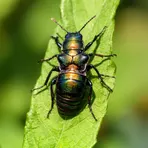
A small animal with a body in three parts, six legs and often wings

An insect with four wings covered in tiny scales, like butterflies and moths
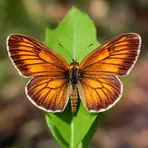
An insect with two pairs of wings covered with tiny scales like butterflies and moths
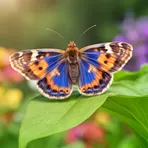
An insect like a butterfly or moth
Surface Forms
Morphology
lepidopteran = Lepidoptera (semi-transparent) = lepidoptera + an
The suffix '-an' regularly forms a member/related adjective from a taxonomic name (Lepidoptera → lepidopteran), but the base is a specialized scientific term and its internal Greek parts are not familiar to average learners.
Etymology
Lepidopteran comes from Greek parts lepido- ('scale') and -ptera ('wing'), so it means 'scale-wing'. That's a clear picture: butterflies and moths (the lepidopterans) have tiny scales on their wings, and the -ptera part is the same 'wing' idea you see in helicopter.