
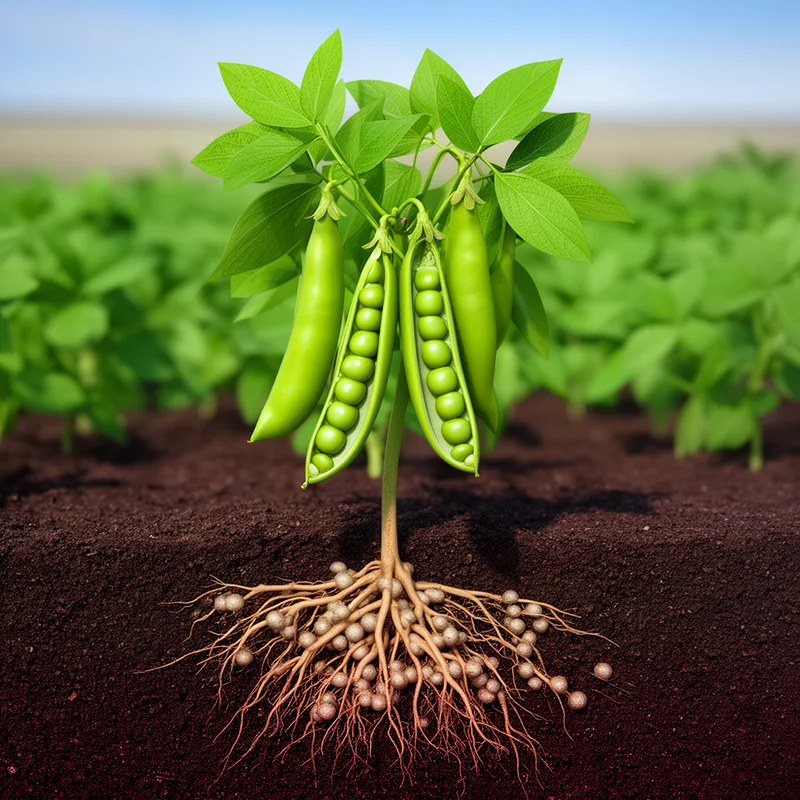
leguminous plant
- noun
- /ˌlɛɡjʊˈmoʊnəs plænt/
- Specialized
- Research shows that leguminous plants are crucial for sustainable farming due to their ability to fix nitrogen.
Examples
-
McFall-Ngai and Ruby hope they have found a model that will be as useful for exploring animal-bacteria mutualism as the leguminous plant-Rhizobium model has been for plant-bacteria mutualism.
Academic text (1993) -
Nitrogen fixation in leguminous plants is dominated by a variety of endosymbiotic bacteria.
Academic text (1997) -
In agriculture, farmers often choose leguminous plants like beans and peas to improve soil fertility.
-
Many gardeners incorporate leguminous plants in their landscapes to enhance biodiversity and enrich the soil.
Synonyms
 17
2.9
17
2.9

A plant with seeds in pods, like beans or peas, that people eat


 1
1.4
1
1.4
A plant that produces beans you can eat
Surface Forms
Morphology
The noun phrase is fully compositional: 'leguminous' means 'related to legumes (beans, peas, etc.)' and simply modifies 'plant', so the phrase denotes a plant of that type. This adjective+ noun pattern is standard and cross-linguistically transparent, so a learner who knows both constituents can derive the meaning.
Etymology
Leguminous plant refers to plants in the bean and pea family that grow seeds inside pods and make small root bumps that put nutrients into the soil. Because these plants keep seeds in pods and help the soil, farmers plant them to 'enrich' fields, so the phrase now means plants like beans, peas, or clover.