

to leaven
 4
6.6
4
6.6

- verb
- /ˈlɛvən/
- To make the bread soft, you need to leaven the dough with yeast before baking.
Loading YouTube…
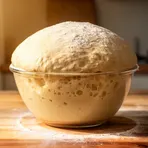
Watch on YouTubeI'm going to cover it with plastic wrap, and I'm going to let the dough do what it does, react with the yeast and the sugars and start to leaven.
- I'm going to cover it with plastic wrap, and I'm going to let the dough do what it does, react with the yeast and the sugars and start to leaven.
- Just to give a little bit of background, a leavening agent or to leaven is comes from the old Latin word levar, which means to raise.
Examples
-
In addition to the gases produced by the yeast, properly leavened bread requires something to trap the gases.
Blog text (28) -
As the dough starts to leaven, what happens to the raisins within the dough?
-
As it says in Corinthians, a little leaven leavens the whole thing.
Blog text (13) -
Bioengineering barley's genes for thioredoxin and related proteins might prove key to making leavened loaves from barley flour.
Academic text (1994) -
The researchers are now scrutinizing genes that might make a rich, nut-flavored barley bread—leavened without the help of wheat flour—a reality.
Academic text (1994) -
The baker decided to leaven the batter with baking powder for a fluffier cake.
-
Let the mixture sit for a while so the heat can properly leaven it and create a light texture.
Synonyms
 8
4.8
8
4.8
To make dough become light and puff up before baking

To make the dough rise and become light by adding yeast or baking powder

To add a very small living thing to dough or liquid so the mixture rises and ferments
Antonyms

Phrasal Verbs
Compounds

- Specialized
An ingredient added to dough or batter to make it rise and become lighter
How Light
4
6.6

Surface Forms
Etymology
The verb leaven comes from Latin levare 'to raise', so to leaven is simply to add something that makes dough or batter 'rise' and become light.