

lambda
- noun
- /ˈlæmbdə/
- Specialized
- In craniometry, the lambda is the point on the skull where the sagittal and lambdoid sutures meet.
- Wilks' lambda
Examples
-
During the anatomy class, the teacher explained how to identify the lambda on a skull model.
-
For precise measurement in cranial studies, researchers often refer to the lambda as a key anatomical landmark.
-
Therefore, low values of lambda indicate groups that are very different.
Academic text (1995) -
A possibility is that lambda t, P t, and c t are all constant, as suggested by Adelman.
Academic text (2001) -
Like the more familiar proton, the lambda is made of three quarks.
Academic text (2006) -
Immunohistochemistry showed that the plasma cells synthesized Ig light chains of the types kappa and lambda in equal numbers.
Academic text (2004) -
MANOVA revealed a significant main effect for form (Wilks's lambda = .495, p < .001).
Academic text (2001) -
Compared with the reverberation and the LP conditions, the functions for the noise and HP conditions yielded higher Wilks's lambda, indicating that listeners' performance was more easily separable in these conditions than in other conditions.
Academic text (2012)
Compounds
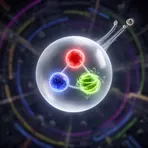
- Specialized
A tiny neutral particle made of three quarks that contains a strange quark
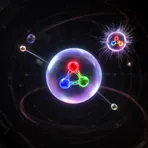
- Specialized
A neutral particle made of three quarks that appears in particle physics

- Specialized
A desert snake from southwestern North America that is not venomous and has a V-shaped mark on its head
Surface Forms
Etymology
Lambda names the point on the skull because the meeting of two sutures makes a shape like the Greek letter lambda, so doctors and scientists use the lambda as a clear landmark on the head.

