
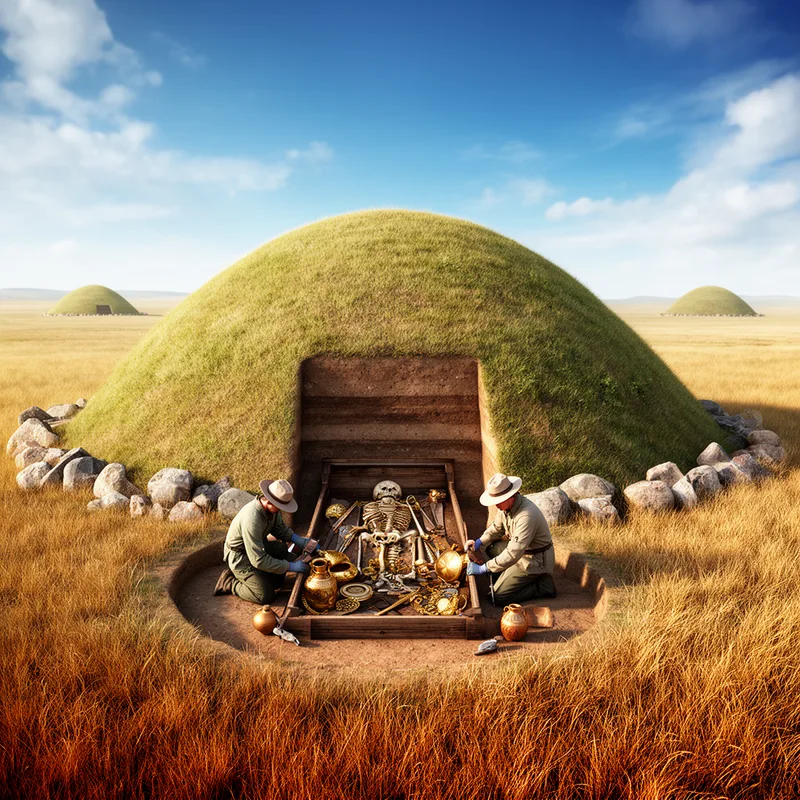
kurgan


 1
9.9
- noun
- /ˈkɜrɡən/
- Specialized
- It was also an essential companion in the afterlife, and the elite could expect to be buried in large mounds, or kurgans, along with several sacrificed horses.
Examples
-
The archaeologists uncovered ancient artifacts buried within the kurgan, revealing secrets of past civilizations.
-
In 1998, we excavated one of these great kurgans in the Altai Mountains of eastern Kazakhstan.
Academic text (2002) -
All she saw were hump-backed burial kurgans rising out of the dun-colored steppe.
Fiction book (1996) -
In the region, many kurgans can be found dotting the landscape, each containing the remains of a noble warrior.
-
During their hike, they stumbled upon a large kurgan that had stood for centuries, a testament to ancient burial traditions.
Synonyms
 4
7.1
A mound of earth or stones built over a grave, often in ancient times
 1
9.5
A large round mound of earth or stones covering an old grave
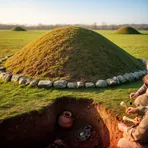 1
8.8
A heap of earth built over a grave in ancient times
Surface Forms
Etymology
Kurgan comes from Russian and an old Turkic word qurğan meaning 'fort' or 'protected place', so picture a high 'hill' that guards what is under it. That's why a kurgan is a large burial mound built over graves.