
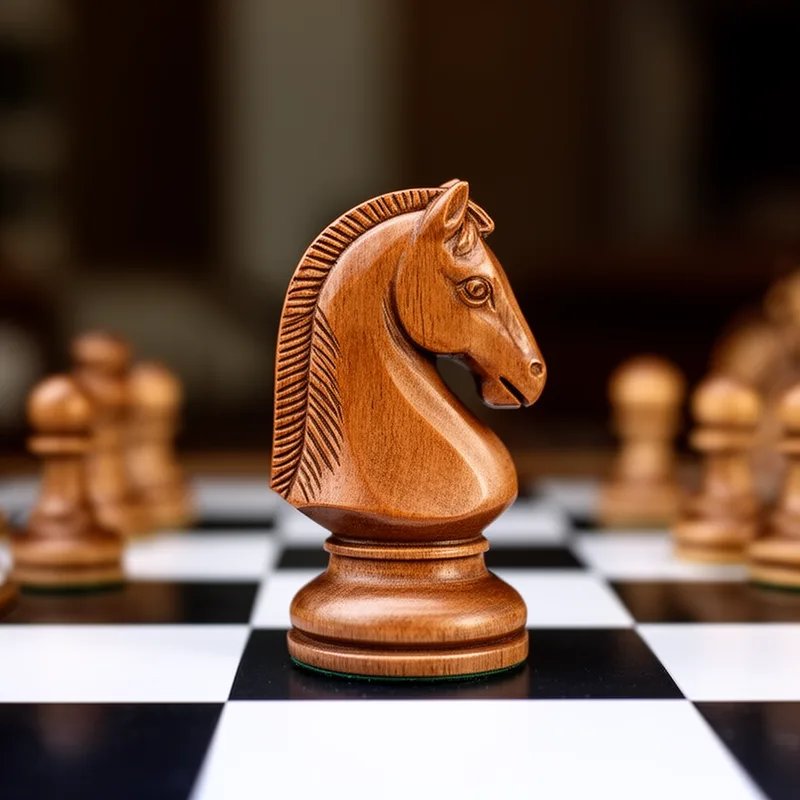
knight
 20
4.2
20
4.2

- noun
- /naɪt/
- Queen takes knight.
- a white knight
- chess knight
- a black knight
Loading YouTube…
Watch on YouTubeSo, yeah, chess does not just like deploy your Knights off the back row and therefore you win.
- So, yeah, chess does not just like deploy your Knights off the back row and therefore you win.
- Yeah, OK, so Knights tours, Knights tours have to win it out.
- And it starts to say, Oh, well, you thought that the Knights move pincer joseki was a great idea.
- We aren't pawns and Knights and bishops.
- I had to look at the pieces on the board like in my a knight, in my Bishop, in my Rook.
- Bishop or knight Depends if you're religious or not.
Examples
-
Bishop to knight 4.
-
Knight to h3.
-
Doing so, he would attack the knight from three sides.
-
And if I move my knight instead, he moves his bishop.
Fiction book (2000) -
Then I bring my queen to knight 4 and threaten mate in one move.
-
Several pawns, a knight, and a bishop have been taken.
Fiction book (2001) -
Pawn takes knight.
-
Knight to king-4.
-
White had king C3, rook A1, knight D5, pawns B2 and C4.
-
The knight moved to knight four and controlled the center of the board.
Synonyms
 15
6.2
15
6.2
A chess piece that moves in an L shape, also called the knight
Compounds
- Literature
11
9.7
A Christian warrior from the Middle Ages who protected pilgrims and holy sites in Jerusalem

- Literature
4
9.1
A member of King Arthur's court who sits at the Round Table and is brave and fair

 1
8.8
1
8.8
A member of a Masonic group that uses rituals and symbols from a medieval Christian military order
- Archaic

 1
9.9
1
9.9
A person from the Middle Ages who travels to find adventures and help people

- Slang
1
8.3
A person who defends someone online to seem morally better or get attention






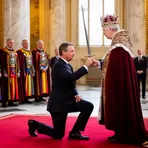
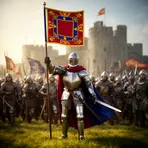
- Archaic
A knight honored for bravery who can lead soldiers under his square flag


- Archaic
A person honored for great bravery who leads troops and carries a square banner

- Archaic
A person who performs skilled whip tricks in rodeos or who is very strict about rules
How Valuable

Surface Forms
Etymology
The chess piece knight is named after the horse-riding warrior and is shown as a horse's head. Because real knights rode horses that could jump and move in sudden ways, the chess knight moves in an L-shape like a jumping horse, which is why the piece has that name.