

keratectomy
- noun
- /ˌkɛrəˈtɛkəmi/
- Specialized
- The doctor performed a keratectomy to improve her vision.
- photorefractive keratectomy
- keratectomy (PRK)
Examples
-
A keratectomy may be recommended for people with certain corneal diseases.
-
After the keratectomy, the patient's vision gradually improved over several weeks.
-
The surgeon explained the risks and benefits of keratectomy before the procedure.
-
After the keratectomy, he noticed significant improvement.
-
The doctor explained that a keratectomy can help correct vision problems caused by the cornea.
-
After undergoing a keratectomy, she noticed a significant improvement in her sight.
-
During her consultation, the eye specialist discussed the benefits of keratectomy for treating her eye condition.
Synonyms
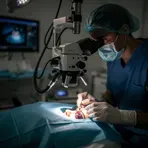
 8
3.9
8
3.9

A medical operation on the eye to fix sight problems
 8
5.6
8
5.6
A surgery that uses a laser to reshape the clear front part of the eye to improve sight without glasses
 1
3.4
1
3.4
A surgery on the eye to fix vision or treat eye problems


 1
8.4
1
8.4
A cut in the clear front part of the eye to improve vision

A surgery that uses a laser to reshape the clear front part of the eye so you see better
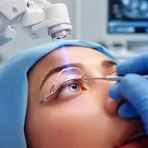
An operation that uses a laser to reshape the front of the eye after lifting a flap to improve vision

A type of eye surgery that reshapes the cornea by creating a small flap to correct vision
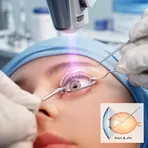
An eye operation that reshapes the clear front part of the eye to improve vision

Surgery that makes cuts in the clear front of the eye to change its shape and improve near vision
How Invasive

Surface Forms
Morphology
keratectomy = kerat + ectomy
Although the term is built from a classical combining form meaning 'cornea/horn' and the medical suffix '-ectomy' meaning surgical removal, this structure is not transparent to an average B1 learner.
Etymology
Keratectomy comes from Greek parts kerato- meaning 'horn' and -ectomy meaning 'cutting out'. The clear front part of the eye, the cornea, was seen as horn-like, so a keratectomy is the surgical removal of part of the cornea to improve vision.