

radial keratotomy
- noun
- /ˈreɪdiəl ˌkɛrəˈtɑːmədi/
- Archaic
- Many patients choose radial keratotomy for myopia correction.
Examples
-
After the radial keratotomy, my vision improved dramatically.
-
Some patients experience long-term effects after radial keratotomy, especially as they age.
-
Radial keratotomy was a popular procedure for correcting myopia before laser surgeries became common.
-
After undergoing radial keratotomy, his vision improved significantly and he no longer needed glasses.
-
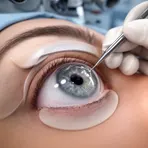
In radial keratotomy, a surgeon makes small incisions in the outer part of the cornea, allowing it to change shape and improve vision.
-
Many patients seek radial keratotomy as a solution for their nearsightedness, hoping for clearer sight without glasses.
-
Radial keratotomy is often recommended for people with myopia who wish to reduce their dependence on contact lenses.
Synonyms


 1
8.4
1
8.4
A cut in the clear front part of the eye to improve vision
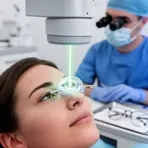
A surgery that uses a laser to reshape the clear front part of the eye so you see better

An operation that uses a laser to reshape the front of the eye after lifting a flap to improve vision

An eye operation that removes part of the cornea to improve vision or treat disease
Surface Forms
Morphology
The term is compositionally built from 'radial' (radiating from a center) and 'keratotomy' (a surgical cut in the cornea), so its meaning — surgical incisions arranged radially in the cornea to correct vision — is directly derivable from the parts. This follows standard medical compounding and has cognates across languages, so a learner who knows both constituents would understand the MWE.
Etymology
Radial keratotomy comes from the words radial and keratotomy: radial means 'like the spokes of a wheel' and keratotomy means 'cutting the cornea'. Surgeons made small cuts in the clear front of the eye that looked like spokes so the cornea could change shape, so the operation 'corrects nearsightedness'.