
to keep in
 105
3.0
105
3.0

- phrasal verb
 :
mantener en
:
mantener en
It's just a man's length, long, and there was a bar door and then an outer door and he'd be kept in there total dark.
- It's just a man's length, long, and there was a bar door and then an outer door and he'd be kept in there total dark.
Examples
-
All students should be kept in classrooms while the search is in progress.
Academic text (1990) -
Following their meeting at the 1993 International Women's Brass Conference, Duga and Awkerman kept in touch.
Academic text (2015) -
Due to the heavy snowstorm, the school decided to keep in all the students for the day.
-
The doctor said I had to keep in for a few days to recover from my surgery.
-
She was so sick that her parents opted to keep in her for the week instead of sending her to school.
Antonyms

How Confined

Surface Forms
Morphology
The meaning 'to require someone to remain indoors' is directly and compositionally built from 'keep' (to retain or continue) + 'in' (inside), so a learner who knows both words can infer the action of keeping someone inside. This verb+particle pattern is common cross-linguistically and follows ordinary spatial/compositional logic, making it readily understandable to a B1 learner.
Etymology
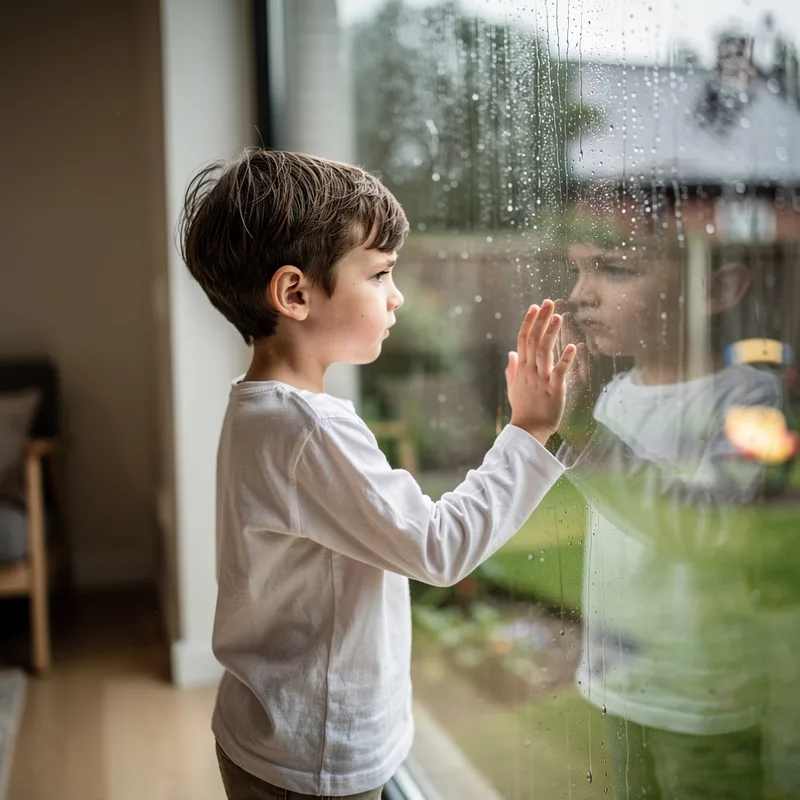
Keep in comes from the simple picture of someone being kept inside: to keep (hold) someone in (inside a room or house). So it means 'to make someone stay inside' or 'to keep someone indoors'.