

to judge
 ∞
2.5

- verb
- /dʒʌdʒ/
- It's not my place to judge anyone.
- judge others
- judge harshly
- judge the quality
Loading YouTube…
Watch on YouTubeWhen you feel the desire to judge yourself, let it go.
- When you feel the desire to judge yourself, let it go.
- You know, things like don't kill, don't judge lest you be judged.
- I said, how do you judge a great restaurant?
- And hey, who am I to judge vocally on this podcast?
- These days I just choose not to judge people live and let live.
- Unfortunately, one of the most judged parts of us is sexuality.
- Don't let people judge you because who you are.
- He said you cannot judge your character.
- I'll just report on it and judge it and talk about it.
- And people will judge us if we think we're awesome.
- I'd also say not judging each other so harshly.
- They're all in with Hamas, just judging by their actions.
- He tells us God judges us from our judgement.
- But I do think that we judge women's sports by the male model.
Examples
-
And people will judge us if we think we're awesome.
-
Leaders ultimately will be judged less by their broad visions than by their actual accomplishments.
Academic text (2017) -
I said, how do you judge a great restaurant?
-
These days I just choose not to judge people live and let live.
-
I mean, it's so much easier to judge than think.
-
When you feel the desire to judge yourself, let it go.
-
Who am I to judge?
-
We use today's standard to judge leaders of yesterday.
-
Researchers who are familiar with the available methodology judge the accuracy of the information presented.
Academic text (2012) -
It's important to judge a person's character based on their actions, not just their words.
Synonyms
 ∞
1.0
To make a choice after thinking about the options
 ∞
1.8
To choose between different options after thinking
 381
3.1
To decide something after looking at the facts
 351
3.2
To judge how good or useful something is
 351
6.5
To decide whether someone is guilty or not guilty
 211
4.6
To think something is a certain way
 118
3.5
To officially give a decision about someone or something
 95
3.7
To make an official decision, often in a court
 39
5.2
Form an opinion about someone or something, often a critical one
 18
7.8
To make an official decision about a disagreement, often in court or a contest
 17
3.0
To make a final decision after thinking
 2
6.9
To make a final decision about a disagreement after hearing both sides
 2
8.1
Officially decide something, often in a court
 1
2.9
To choose what to do after thinking about the options
Idioms

- Informal
9
4.4
Decide something about a person or thing by how they look

- Informal

 1
8.7
Make an excuse that nobody believes and only a judge cares about
Compounds


- Specialized
11
7.4
An officer in the military who gives legal advice and handles law for soldiers

- Specialized
8
9.1
A senior military lawyer who gives legal advice to a branch of the armed forces

- Literature
6
7.5
A judge who decides cases based on personal beliefs to promote social change

- US
1
4.8
An official who helps the referee by watching the sideline and keeping the game time

- Jargon
1
5.5
An official in American football who watches passes and calls penalties near the far sideline

- US
1
7.9
An official in American football who watches plays and passes downfield on one sideline

- Slur
1
8.7
A person who judges contests very strictly and unfairly, used as a joke
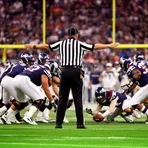
- Jargon
1
5.5
An official in American football who stands deep behind defenders to watch the play and enforce rules

How Certain

Surface Forms
Etymology
Judge comes from the old Latin word iudex, built from ius 'law' and dicere 'to say'. To judge a person or thing is to form an opinion and 'decide' about it after thinking, which matches the word's original sense of giving a decision.