

to judge
 117
2.3
117
2.3

- verb
- /dʒʌdʒ/
- But he had to go to Philly to judge a tattoo contest, right?
- criteria for judging
- judge the performance
- judge the speech
Loading YouTube…
Watch on YouTubeBut he had to go to Philly to judge a tattoo contest, right?
- But he had to go to Philly to judge a tattoo contest, right?
- The scores will be judged by what happens after the takedown.
- The countries are judged on the performance of their signature song.
- I'm going to need another to judge appropriately.
Examples
-
My father had been chosen to judge the bungalow colony's annual beauty pageant.
Fiction book (1997) -
The reading, a kind of oratorical talent show, would be judged by several teachers.
Fiction book (1994) -
And then how do you judge sort of success from that?
-
So now it's time to judge it best to worst.
-
If you want to judge your movie, at least judge the final product you know.
-
Now how do we judge who is reasonable and who is not?
-
Each band tonight will be judged and scored on multiple categories.
-
An external panel of business-oriented professionals and members of the student entrepreneurship club judged the final presentations.
Academic text (2017) -
MEJ articles are refereed by practicing professionals who judge manuscripts on their importance, originality, timeliness, scope, accuracy, and style.
Academic text (2015) -
The panel of experts will judge the contestants based on their performances.
Synonyms
 ∞
1.0
∞
1.0
To end a disagreement by choosing a final outcome
 675
3.4
675
3.4
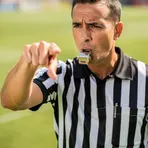
To make an official decision in a sports game
 17
7.8
17
7.8
To make an official decision about a disagreement, often in court or a contest
 9
3.2
9
3.2
To act as the official who makes sure players follow the rules in a game
 5
6.8
5
6.8
To act as the official who makes sure players follow the rules in a sports game
 2
8.1
2
8.1
Officially decide something, often in a court
 2
6.5
2
6.5
To judge entries in a competition as a member of a panel
Idioms

- Informal
9
4.4
Decide something about a person or thing by how they look

- Informal
Make an excuse that nobody believes and only a judge cares about
Compounds


- Literature
4
7.5
A judge who decides cases based on personal beliefs to promote social change

- Specialized
4
7.4
An officer in the military who gives legal advice and handles law for soldiers

- Specialized
1
9.1
A senior military lawyer who gives legal advice to a branch of the armed forces

- US
1
4.8
An official who helps the referee by watching the sideline and keeping the game time
- Jargon

 1
5.5
1
5.5
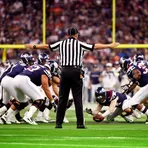
An official in American football who stands deep behind defenders to watch the play and enforce rules

- US
1
7.9
An official in American football who watches plays and passes downfield on one sideline


- Jargon
An official in American football who watches passes and calls penalties near the far sideline

How Decisive

Surface Forms
Etymology
Judge comes from the old Latin word iudex, from ius 'law' and dicere 'to say'. To judge a contest is to 'say' who wins or to decide the outcome, which links the origin to the modern use in competitions.