

irons
 3
7.7
3
7.7

- noun
- /ˈaɪərnz/
- Archaic
- During the trial, the defendant's irons clanked as he was led into the courtroom.
Examples
-
After the escape attempt, the guards placed heavy irons on his wrists.
-
But of course, he looks at the front of it, he sees XI Feng, his soul enters the mirror, and he is dragged away in iron chains to die.
-
The prisoner was locked in irons to prevent any escape.
Synonyms
 184
1.0
184
1.0
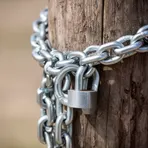
A line of metal rings joined together used to fasten or hold things
 134
5.6
134
5.6
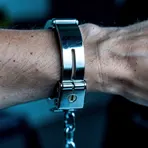
A metal band that locks around the wrist to stop a person from moving their hands
 57
7.1
57
7.1
A metal U-shaped clamp used to join heavy things together
 5
8.6
5
8.6
A metal ring that locks around a wrist to stop someone moving


 1
9.9
1
9.9
A metal shackle that holds someone's hands or feet
Antonyms


How Restrictive

Surface Forms
Morphology
Etymology
Irons comes from the metal iron, because handcuffs and shackles were made from that strong 'metal'. So being 'in irons' means being held by metal bonds, which explains why irons means chains used to restrain prisoners.