

gyve


 1
9.9
1
9.9
- noun
- /dʒaɪv/
- Archaic
- The blacksmith forged a new gyve to secure the dangerous outlaw.
Examples
-
The prisoner struggled against the heavy gyve that bound his ankles.
-
In old tales, heroes often broke free from the gyves that held them captive.
-
The prisoner wore a heavy gyve on his ankle.
-
He was shackled with gyves during the trial.
-
The prisoner was secured in gyves to prevent his escape.
-
The historical display included a pair of gyves that were used for restraining captives.
-
The guard noticed the old gyves on the floor of the abandoned cell.
Synonyms
 134
5.6
134
5.6
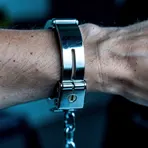
A metal band that locks around the wrist to stop a person from moving their hands
 57
7.1
57
7.1
A metal U-shaped clamp used to join heavy things together
 14
3.2
14
3.2
A metal ring that locks around a wrist used by police to stop someone moving
 5
8.6
5
8.6
A metal ring that locks around a wrist to stop someone moving
 3
7.7
3
7.7
Metal cuffs that hold a prisoner's hands or legs together
Antonyms

How Restrictive

Surface Forms
Etymology
The word gyve is an old name for a metal shackle used to hold a person's hands or feet. Think of it as an iron ring that 'binds' the ankles, which is why gyve means a heavy restraint.