

ionized


 1
7.1
1
7.1
- adjective
- /ˈaɪəˌnaɪzd/
- Specialized
- Atomic hydrogen is much more transparent than ionized hydrogen, and so when it's hot, you can't see through it.
Loading YouTube…
Watch on YouTubeLight scatters a great deal from ionized material.
- Light scatters a great deal from ionized material.
- That's from all all the ionized calcium being glommed on with albumin.
- Nature's Beast CMOS infused with Moringa Oliveira tea and ionized water.
Examples
-
Not all of the particles are ionized to emit light.
-
Scientists observed ionized hydrogen during their experiments with plasma physics.
-
It's just gentle and it suddenly goes into this ionized form and it's stable.
-
OK, now this is a soup of ionized atoms.
-
They applied high voltage to gas to create multiple strands of ionized plasma loops.
-
These include using superconducting electronic circuits, trapping ionized atoms, or squeezing light.
-
In plasma thrusters they have a tank of some sort of liquid gas that they turn them into the ionized gas atoms which are incredibly heavier than the electrons.
-
The ionized gas created from the electrical discharge glowed brightly in the dark room.
-
Ionized particles in the atmosphere can affect satellite communications.
Synonyms
 8
5.0
8
5.0
Relating to charged particles like those in salt
Antonyms

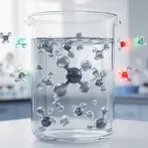
How Ionized
- Specialized
1
7.1

- Specialized
12
5.6
Surface Forms
Morphology
Etymology
The word ionized comes from the root ion, a word for a 'charged particle', and the ending -ize, meaning 'to make'. So to be ionized is to be 'made' into charged particles, as when atoms gain or lose tiny parts called electrons, which is why ionized substances have an electric charge.