
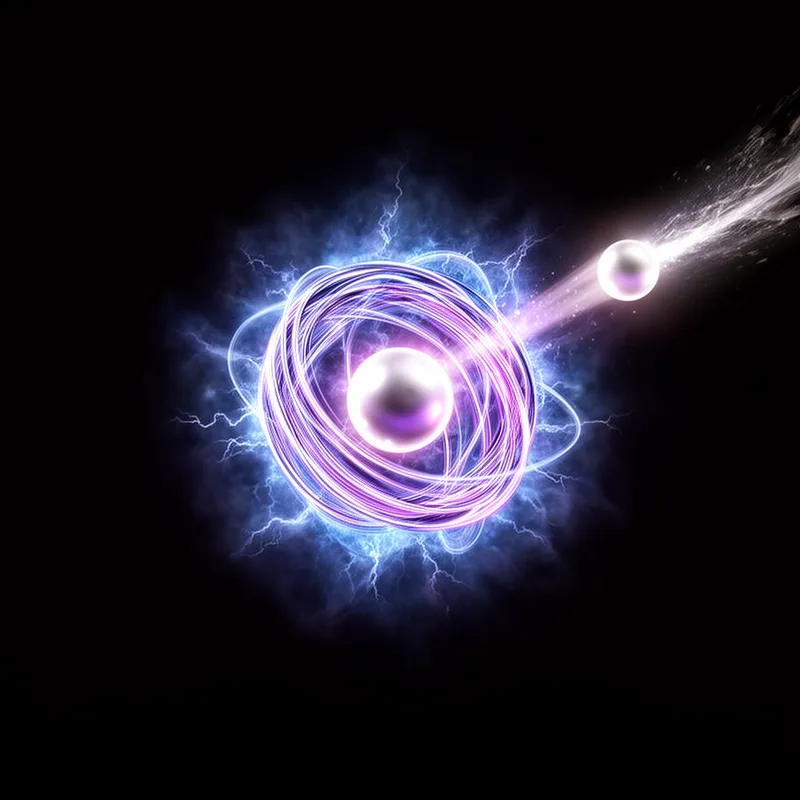
ionization
 11
7.0
11
7.0

- noun
- /ˌaɪənaɪˈzeɪʃən/
- Specialized
- Early in his career, he advanced the theoretical understanding of ionization processes in hydrocarbon flames.
- desorption ionization
- Electrospray ionization
- ionization mass spectrometry
Loading YouTube…
Watch on YouTubeIs it using some type of ionization and Magna hydrodynamics to move air around the vehicle?
- Is it using some type of ionization and Magna hydrodynamics to move air around the vehicle?
- It's not so much the ionization itself, it's that if radiation can ionize, you know it can also break molecular bonds.
Examples
-
But here on land there are other sources of ionization, things like natural radioactivity.
-
As you move out through the sun from the center outwards, the conditions change and the level of ionization changes.
-
The resulting ionization current is digitized and used to monitor and control the radiation sequence.
Academic text (2002) -
The principal source of ionization in the atmosphere below 30 km altitude is galactic cosmic rays.
Academic text (1998) -
The process of ionization allows atoms to gain or lose electrons, often due to heat or radiation.
-
Scientists study ionization to understand how energy affects atoms and molecules in different environments.
-
High temperatures can increase the rate of ionization, resulting in more charged particles in a gas.
Compounds

- Specialized
Device that measures radiation that makes charged particles by detecting those particles in a gas

- Specialized
A number that shows how much a weak acid or base separates into ions in water

- Specialized
A device that measures radiation by detecting tiny charged particles in a gas tube
How Ionized


Surface Forms
Morphology
Etymology
Ionization comes from the Greek root ion, which means 'going', and the ending -ization, which means 'the process of making'. A helpful way to remember it is that an ion is an atom that has 'gone' from being neutral by losing or gaining electrons, so ionization is the 'process' that makes atoms into charged particles that can move.