
inversion


 1
8.6
1
8.6
- noun
- /ɪnˈvɜrʒən/
- Specialized
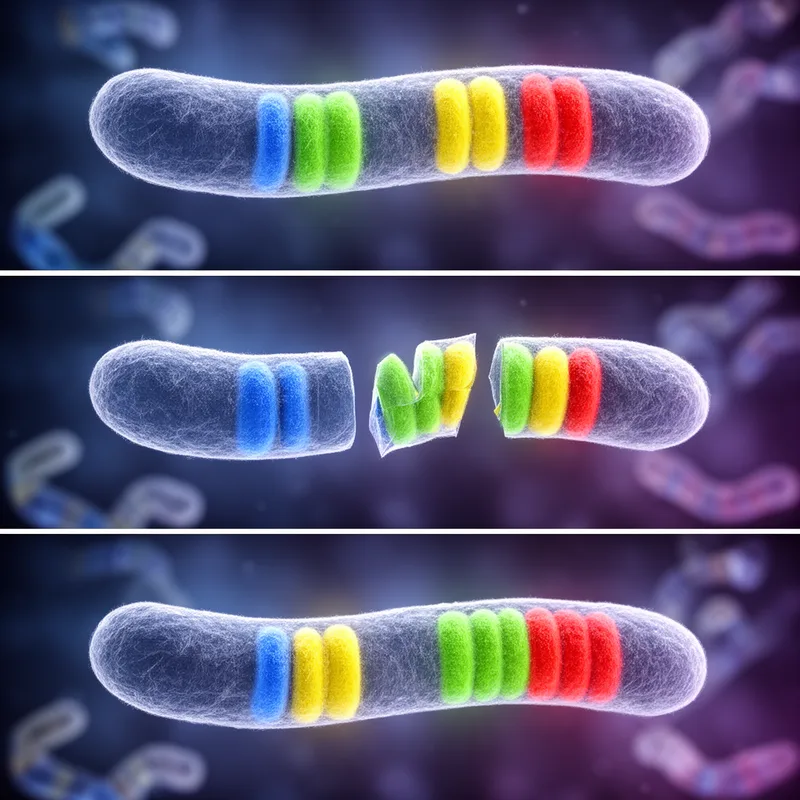
- Researchers found that the inversion of a gene sequence can significantly impact the expression of certain characteristics in the organism.
Examples
-
The study focused on a specific inversion in chromosome 2 that played a crucial role in the development of genetic traits.
-
In support of his position, he points out that gene mutations involve movements, duplications, inversions, and deletions in addition to limited point mutations.
Academic text (2008) -
The speech confirms the main movement of the second nucleus as an inversion of the first: Vitoriano, who earlier rejected Placida's advances, now desperately seeks her, while she, lost in hopeless despair, flees from him and the rest of civilization.
Academic text (1997) -
This inversion becomes literal when he singles out as a notable human encounter in Narayan's ashram his early morning sight of "a pair of legs staring me in the face": "My roommate was standing on his head, a morning exercise which he assured me is exceedingly good for the circulation of the blood."
Academic text (1995) -
The genetic analysis revealed a rare inversion that caused a change in the order of genes on the chromosome.
Synonyms
 25
4.2
25
4.2
A change to the opposite direction or position, for example when wind turns
Compounds

- Specialized
To find a matrix that, when multiplied by the original, makes the identity matrix

Surface Forms
Morphology
Etymology
Inversion comes from the Latin invertere, where in- means 'in' and vertere means 'to turn'. In genetics, an inversion is when a piece of a chromosome is cut out and put back in the 'opposite' direction, so the order of genes is turned around.