
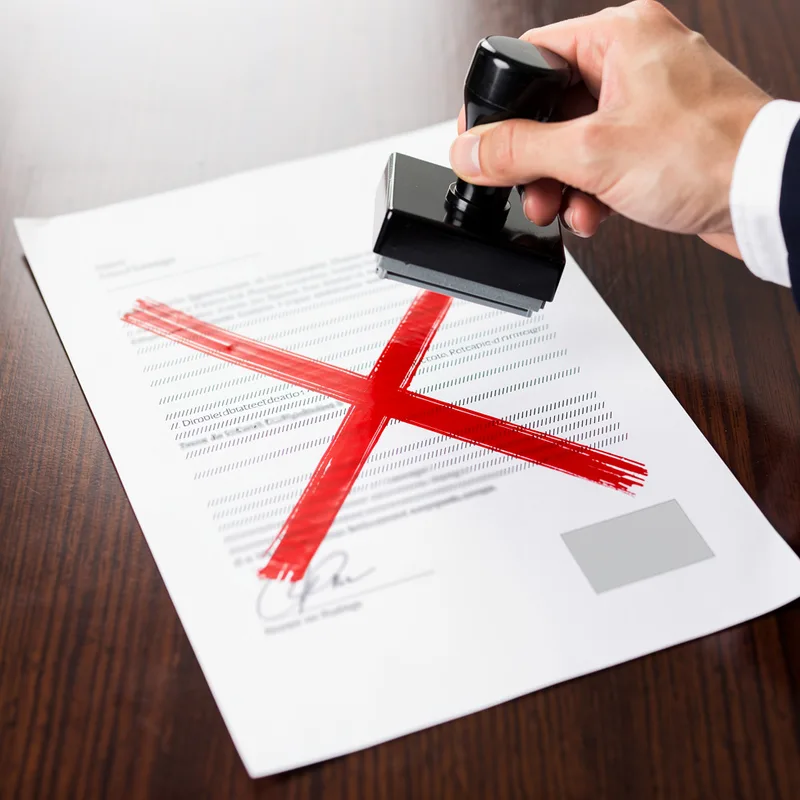
to invalidate
 33
6.1
33
6.1

- verb
- /ɪnˈvælɪˌdeɪt/
- Formal
- In Keta, the Court of Appeals invalidated a statute authorizing warrantless searches of vehicle-dismantling businesses.
- invalidate the law
- invalidate a statute
- the court invalidated
Loading YouTube…
Watch on YouTubeThey will lash out and invalidate others in the service of their fragile egos.
- They will lash out and invalidate others in the service of their fragile egos.
- However, using the spiritual stuff as one more tool to invalidate people, that's not OK.
- You cannot invalidate away someone's feeling about being wronged.
- When you when you invalidate very real fears, you make the fear bigger.
- It's going to be people wanting to invalidate what is true with their reasons for why black life should be deemed as worthless.
- The fact that it's handwritten doesn't invalidate it, but it makes it have more potential bumps in the road.
- And it's not to in any way invalidate the software predisposition that you can come out-of-the-box with that exists.
Examples
-
The judge invalidated it.
-
A ruling by the court invalidating the IRS regulation would have effectively ended the Affordable Care Act.
Academic text (2017) -
No; legally, she could invalidate the sale even after the transfer of title.
-
Because these assumptions are so divorced from reality, they invalidate the conclusions of the theory.
Academic text (1995) -
Take Thomas's decision in the recent case in which he invalidated a New York law.
-
For instance, courts have invalidated regulations to eliminate entirely a means of communication.
Academic text (2017) -
All legislation from the Casillas days has been invalidated by General Baez.
-
Any bequest to charity in a will executed within six months of death... can be invalidated by the spouse.
-
The judge decided to invalidate the contract because it was signed under duress.
-
If the evidence is deemed unreliable, the court will invalidate the entire case.
Synonyms
 224
1.0
224
1.0
To make a ticket, order, or rule no longer valid
 143
4.3
143
4.3
To cancel a law or rule so it no longer applies
 112
4.1
112
4.1
To officially end a law, system, or practice
 96
6.2
96
6.2
Officially stop something from being valid, for example a license
 23
7.1
23
7.1
To declare something legally invalid
 15
7.2
15
7.2
To make a law or contract have no legal effect
 11
8.1
11
8.1
Officially say a decision or order is not valid
 10
8.8
10
8.8
To officially cancel a law, agreement, or right
 6
6.3
6
6.3
Officially say that a law, contract, or marriage is no longer valid
 4
7.4
4
7.4
To officially take away approval so officials no longer recognize a school or group
 2
9.9
2
9.9
Make a contract or decision not valid by law

To cancel an earlier decision that said something was not valid so it becomes valid again
Antonyms
How Invalidating
- Formal
122
5.6

- Formal
6
6.3
- Formal
33
6.1
- Formal
552
4.3
777
3.5
Surface Forms
Morphology
Etymology
Invalidate comes from the prefix in- meaning 'not' and the root valid meaning 'strong' or 'officially acceptable', so to invalidate something is to make it 'not valid' and take away its legal or official force.