

intumescence
- noun
- /ˌɪntəˈmɛsəns/
- Specialized
- The fire safety coating relied on intumescence to expand and protect the underlying surface.
Examples
-
Upon heating, the mineral underwent intumescence and released steam.
-
The process of intumescence is critical for certain fire-retardant materials.
-
The intumescence of the material was noticeable during the heating process.
-
Can you explain the concept of intumescence in chemistry?
-
The fire safety coating relied on intumescence to expand and protect the underlying surface.
-
The process of intumescence is critical for certain fire-retardant materials.
-
Upon heating, the mineral underwent intumescence and released steam.
Synonyms


 1
4.1
1
4.1
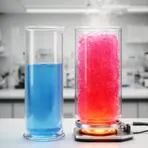
An increase in size of a material, often when heated
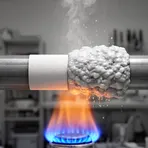
A material that swells and gets bigger when heated, often releasing water
Antonyms

How Expanded

Surface Forms
Morphology
intumescence = tumescence (semi-transparent) = in + tumescence
Formation is the same (in- + tumescence), but the technical/materials-science sense ('increase in volume when heated') is a specialized extension of 'swelling', making it less directly inferable for average learners.
Etymology
Intumescence comes from the Latin parts in- 'in' and tumescere 'to swell', the same root as tumor, so it literally means 'swelling'. That's why the word is used for materials that expand or 'puff up' when heated, as a protective swelling on a surface.