
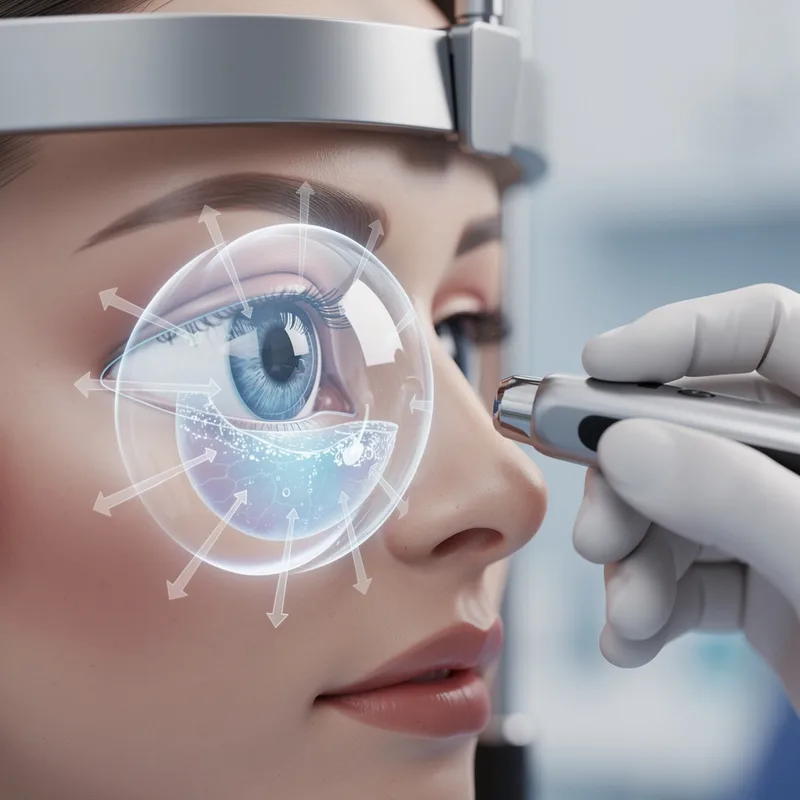
intraocular pressure
 1
6.0
1
6.0

- noun
- /ˌɪntrəˈɑkjələr ˈprɛʃər/
- Specialized
- High intraocular pressure can lead to serious conditions such as glaucoma.
- raise intraocular pressure
Examples
-
Regular eye exams include checking the intraocular pressure to prevent vision problems.
-
In addition, laser treatment for lowering intraocular pressure or peripheral iridectomy was suggested for 3 residents, low vision aids were recommended for 1 resident, and new eye medications were prescribed or changed for 9 residents.
Academic text (1997) -
Upon completion of the study, there was no statistically significant increase in intraocular pressure, and no eyes had developed cataracts.
Academic text (1998) -
A secondary rise in intraocular pressure can cause corneal clouding.
Academic text (1991) -
The two commonest complications are raised intraocular pressure, which can have various causes, and cataract.
Academic text (1991) -
Vision loss results from damage to the optic nerve, which is caused by increased intraocular pressure (IOP) in glaucoma.
Academic text (2018) -
She had no afferent papillary defect, and intraocular pressures were normal.
Academic text (2007) -
It is generally believed that glucocorticoids raise intraocular pressure by increasing the resistance to aqueous humor outflow.
Academic text (1998) -
The doctor measured the intraocular pressure to assess the patient's eye health.
Synonyms
 1
9.2
1
9.2
The pressure inside the eye caused by fluid that fills the eyeball
Surface Forms
Morphology
The noun phrase is transparently compositional: 'intraocular' means 'within the eyeball' and 'pressure' means force, so the phrase literally denotes pressure inside the eye. Despite being medical terminology, the structure follows standard scientific compounding and has clear equivalents in many languages, so a B1 learner who knows both constituents should be able to infer the meaning.
Etymology
The term intraocular pressure comes from a simple picture: intraocular means 'inside the eye' and pressure is the push of fluid there. So the phrase names the push inside the eyeball, which explains why high pressure can harm the eye.