
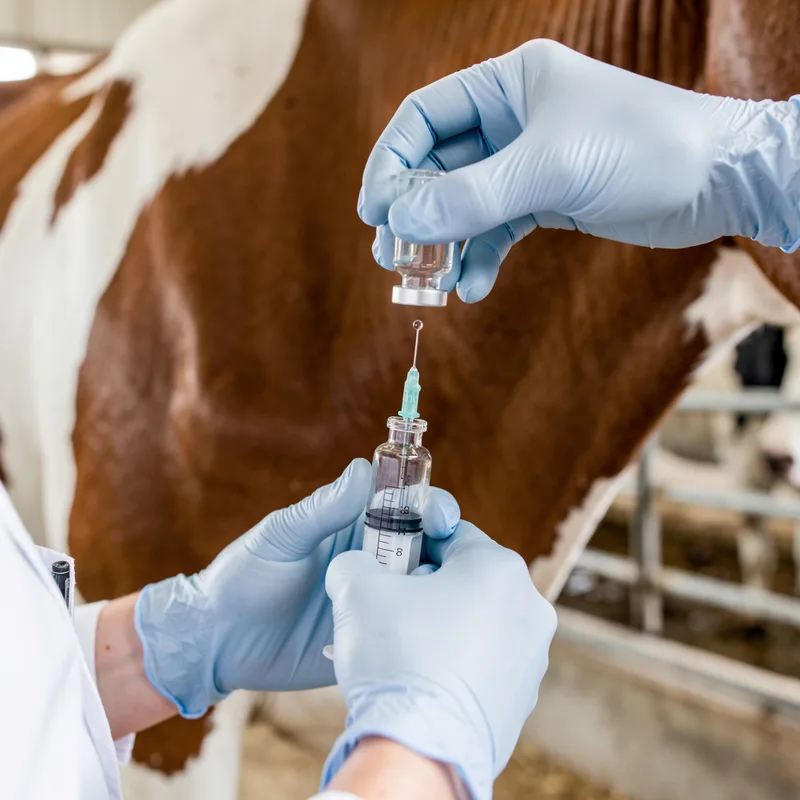
inoculant
 1
8.7
1
8.7

- noun
- /ɪˈnɒkjʊlənt/
- Specialized
- compost as an inoculant
- soil inoculant
- plants use an inoculant
Examples
-
"The end product is an inoculant that can be introduced into the remediation project," says Brown.
Academic text (2001) -
Plant it right about, let's say there, right, instead of sprinkling a microbial inoculant down at the bottom.
-
Compost has an important microbiological component that impacts how it will perform as a soil inoculant and plant disease suppressant.
Academic text (2000) -
Microbial content of compost is helping producers and growers understand its role as a soil inoculant and plant protector.
Academic text (2000) -
Some Caspari plants use an inoculant of microorganisms, with the brand name Effective Microorganism (EM 4) to accelerate the composting process.
Academic text (1998) -
Using finished compost plus compost tea as an inoculant, however, increases the microbial activity as much as 100 times that of raw manure and, in return, yields a much more cost- and time-effective solution.
Academic text (2001) -
Farmers often use an inoculant to enhance crop resilience against pests and diseases.
-
The veterinarian recommended an inoculant to boost the dog's immunity before the show.
-
Using a bacterial inoculant can significantly improve soil health and crop yields.
Synonyms
 374
2.8
374
2.8
A medicine given to make the body build protection against a disease

A substance that makes the body build protection against a disease when given to a person or animal

A substance that makes the body produce protection against a disease, for example in a vaccine

A small amount of germs that people use to start growth or give immunity
Surface Forms
Morphology
Etymology
The word inoculant comes from the Latin parts in- 'into' and oculus 'eye', because gardeners used to 'graft' a small 'eye' or bud into a plant. So an inoculant is something you put into the body to 'plant' protection and help the body build immunity.