

infectious agent
 5
4.2
5
4.2

- noun
- /ɪnˈfɛkʃəs ˈeɪdʒənt/
- Specialized
- Cancer burden in the PICTs consists of a combination of cancers linked to infectious agents, and lifestyle and reproductive factors.
- identify an infectious agent
- spread of infectious agents
- infectious agents, such as bacteria
Examples
-
A well-designed water safety program can be a simple and effective way to prevent the spread of infectious agents through plumbing and ventilation systems.
Academic text (2006) -
The body's immune system serves as a protective means against infectious agents, including viruses, bacteria, and fungi.
Academic text (2013) -
- There are infectious agents here.
-
I was part of a social program treating the infectious agents in the livestock.
-
Laboratory tests to identify an infectious agent are still pending.
Academic text (2011) -
Although a broad range of infectious agents was identified, the etiology of most cases remains unknown.
Academic text (2015) -
Surveillance networks developed for specific purposes could serve as the basis for monitoring other infectious agents and their resistance to antimicrobial drugs.
Academic text (2014) -
University residences present unique challenges for crisis management teams to mitigate the spread of an infectious agent like norovirus (Clark, 2006).
Academic text (2009) -
Whether a child is a symptomatic or asymptomatic carrier of an infectious agent, they pose a risk to other family members through transmission in the home.
Academic text (2008) -
Blood banks test each unit for eight infectious agents, including AIDS and hepatitis.
Synonyms
 50
5.7
50
5.7
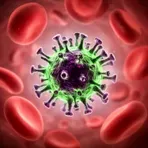
A tiny germ like a virus or a bacterium that causes disease in people and animals


 1
5.1
1
5.1
A very small thing, living or not, that can make people sick
How Infectious
- Specialized
7
6.7

- Specialized
50
5.7
- Specialized
5
4.2
- Specialized
20
5.1
Surface Forms
Morphology
The phrase is a straightforward adjective + noun composition: 'infectious' (capable of causing infection) modifies 'agent' (a thing or entity responsible for an effect), so the combined meaning 'a thing that can cause infection' is directly derivable. This compositional pattern is common across languages and in technical register, so a B1 learner who knows both words should understand the MWE.
Etymology
Infectious agent gives a simple image: agent is like a tiny messenger or actor that carries germs, and infectious means it can spread sickness. So, infectious agent is a tiny living thing, like a virus or bacterium, that can 'cause infection'.